
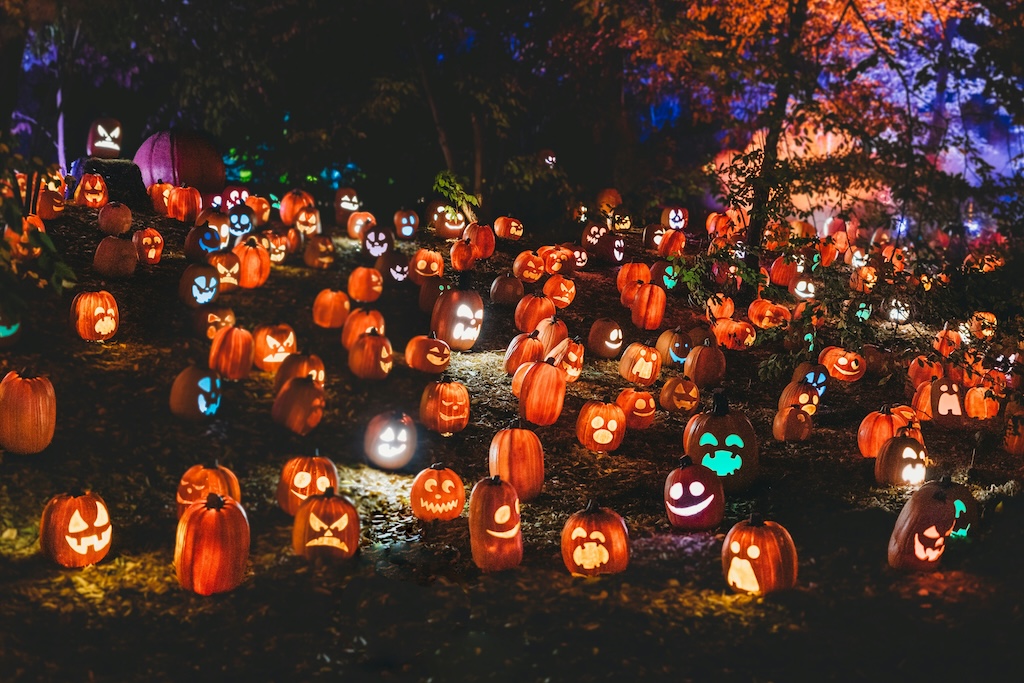

Halloween pumpkin carving has fascinating Irish roots. Explore the legend of the Jack-o’-Lantern and the origins of this Halloween tradition.
Picture a fall evening spent curled up on the sofa beneath a soft blanket, a warm drink in hand, with a film playing. Autumn leaves glow in shades of orange, children in spooky costumes make their way from door to door, and carved pumpkins cast a warm light across the entrances of family homes.

It is an image many of us associate with Halloween, shaped in large part by American popular culture. But how did the pumpkin become one of the holiday’s most recognisable symbols? Its story begins in Ireland, long before it appeared on American screens, and with a rather different vegetable.
What did people carve before pumpkins?
Before pumpkins became the familiar face of Halloween, people in Ireland carved turnips and placed candles inside them to create eerie lanterns. The National Museum of Ireland’s collection includes a model of a traditional “ghost turnip”, based on a lantern made in Fintown, County Donegal, around 1900.
The image is quite different from the large, glowing pumpkins we know today. Yet, this humble root vegetable offers a glimpse into the older traditions behind the Jack-o’-lantern.
The custom is often associated with Samhain, an ancient Celtic festival marking the end of the harvest and the approach of winter. Bonfires, disguises and beliefs about the spirit world formed part of the traditions surrounding this seasonal turning point.
Who was Jack-o’-Lantern?
The name is linked to the Irish legend of Stingy Jack. In one familiar version of the tale, Jack tricked the Devil and was eventually refused entry to both Heaven and Hell. Left to wander in darkness, he carried a burning ember inside a hollowed-out turnip to light his way.
The details vary from one telling to another, but Jack’s lantern became closely associated with Halloween. The name Jack-o’-Lantern lives on in the carved, illuminated decorations that have become a defining part of the holiday.

How did the pumpkin become a Halloween symbol?
When Irish immigrants settled in North America, they brought their customs and stories with them. There, they found a vegetable particularly well suited to the tradition. Pumpkins were larger and easier to carve than turnips, making them ideal for creating striking lanterns.
Over time, the pumpkin became the familiar Halloween lantern we recognise today, closely tied to the autumn imagery of American culture.

The next time you see a carved pumpkin glowing on a doorstep in an American film, you will know that behind this familiar seasonal sight lies a tradition that travelled across the Atlantic from Ireland.
What to make with leftover pumpkin
Pumpkin belongs just as naturally in the kitchen as it does in autumn decorations. It can be turned into a velvety soup with ginger and nutmeg, roasted with olive oil and rosemary, or baked into a sweet pie scented with cinnamon and filled with crunchy walnuts.

