
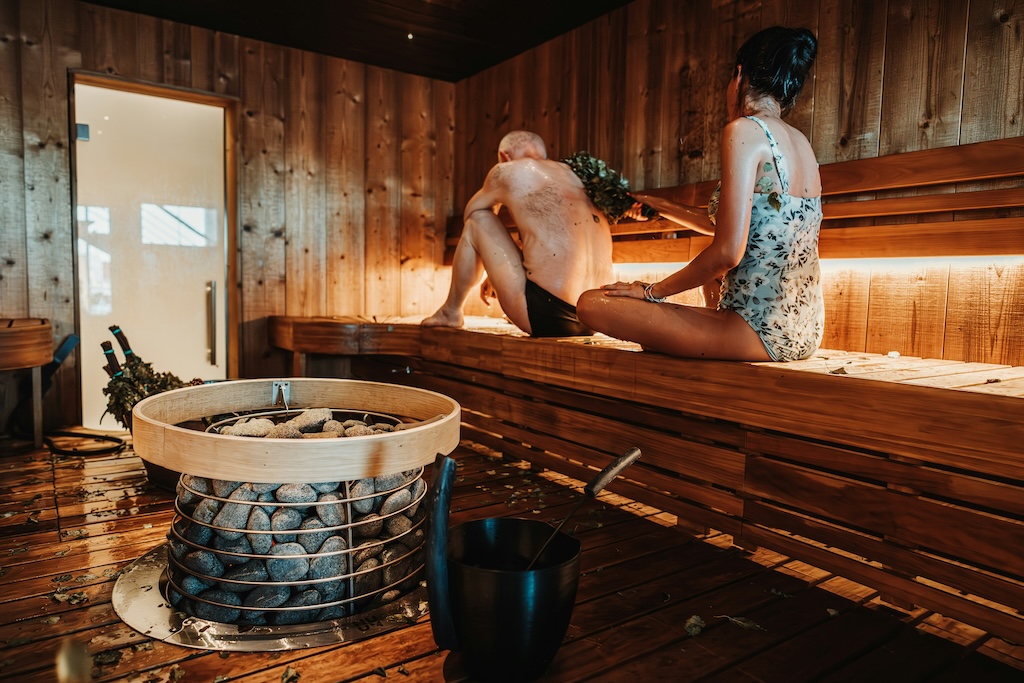

Viking wellness meets olive harvest in Greece, where adventure, nature and local traditions create a new sense of wellbeing.
If the term Viking wellness brings to mind images of rugged Scandinavians, axe-wielding warriors and expeditions across the frozen landscapes of the North, rest assured: there is no need to sharpen your own axe!
Viking wellness reflects a new approach to wellness travel, combining health with physical activity, adventure and adrenaline. Travellers are seeking more immersive experiences through outdoor activities, temperature contrasts, exploration and physical challenges that invigorate both body and mind. Sun loungers, infinity pools and cocktails with a view are giving way to a more active, raw approach to wellbeing.

The Viking wellness experience
Inspired by Scandinavian culture and its close relationship with nature, Viking wellness brings together practices that stimulate the body and engage the senses. One of its defining features is the contrast between heat and cold. Guests relax in a traditional wooden sauna before taking a brief dip in an icy lake or the sea. Afterwards, they enjoy a warm drink and spend some time practising breathing exercises.

Connecting with the natural environment is another essential part of the experience. Forest walks, swimming in natural waters, outdoor yoga and foraging for wild herbs are all incorporated into wellness programmes. At some retreats, participants also cook over an open fire and share meals prepared with locally sourced ingredients.
Forest bathing and wellbeing
Forest bathing, also known as shinrin-yoku, is a practice that originated in Japan and centres on mindful immersion in a woodland environment. Visitors walk among the trees, notice the play of light and colours, listen to the sounds of the forest and breathe in the fresh air. The practice engages the senses and is associated with reduced stress, relaxation and improved mental wellbeing.

Where to experience Viking wellness
In Sweden, Trakt Forest Hotel, in the Småland region, offers a wellness retreat immersed in the forest. Its Silva Spa features a sauna beside a small pond, allowing guests to combine the warmth of the sauna with a refreshing dip. Outdoor hot tubs and trails through the surrounding woodland are also available.
In Iceland, Sky Lagoon, near Reykjavík, combines ocean views with geothermal waters. Its Skjól Ritual consists of seven stages, taking guests from relaxation in the warm lagoon and brief exposure to cold temperatures to the sauna, a sea-salt body scrub and a steam room, followed by a cold mist experience and a final serving of traditional Icelandic berry juice.
Each destination offers its own interpretation of the concept, with nature, physical activity and temperature contrasts at its heart.

Immersive experiences in nature and the Greek countryside
The Greek countryside offers plenty of opportunities for travel centred on nature and local life. Olive harvesting, grape harvesting, walks along historic trails and visits to local producers allow travellers to connect with the landscape and the people, who call it home.
You can walk along rural paths, take part in seasonal activities, sample local products and discover the traditions of each region first-hand. These experiences combine physical activity, discovery and meaningful contact with the natural environment, giving wellness a distinctive Greek dimension.
Olive Harvest in Greece: When and where to take part
The olive harvest in Greece usually begins in late September and can continue until January. For most olive varieties grown for olive oil production, harvesting takes place mainly in November and December. The exact timing depends on the region, the variety and the ripeness of the fruit.
Regions such as Messinia, Laconia, Crete, Lesvos and Corfu offer opportunities to discover olive production first-hand. Organised visits to olive groves and olive mills may include the chance to try harvesting olives, observe the production process and taste freshly produced olive oil.
Olive tourism includes visits to olive groves, traditional and modern olive mills, tastings and activities centred on local gastronomy. The Museum of the Olive and Greek Olive Oil in Sparta and the historic olive mill in Charakopio, Messinia, are two places worth discovering.

Grape harvest in Greece: Exploring Greek vineyards
The grape harvest in Greece usually takes place between August and October, with September being the most characteristic month for picking grapes. The timing varies according to the grape variety, altitude and weather conditions.
In Nemea, Naoussa, Mantineia and Santorini, you can visit vineyards and wineries, discover local grape varieties and learn how wine is made. Depending on the programme and the time of year, you may be able to take part in hand-picking grapes, observe the early stages of winemaking and sample wines from the region.

The best seasons to explore Greece
Each season offers a different set of experiences. From late summer to early autumn, the grape harvest provides an opportunity to visit vineyards and wineries. Autumn and winter are the main olive-harvesting seasons, while spring is ideal for hiking, discovering local flora and exploring woodland and mountain trails.

The Greek countryside offers its own approach to wellbeing through nature, physical activity, seasonal traditions and encounters with everyday life in each region. From a walk in the forest to a day in an olive grove or vineyard, every activity offers a different way to discover Greece.

