
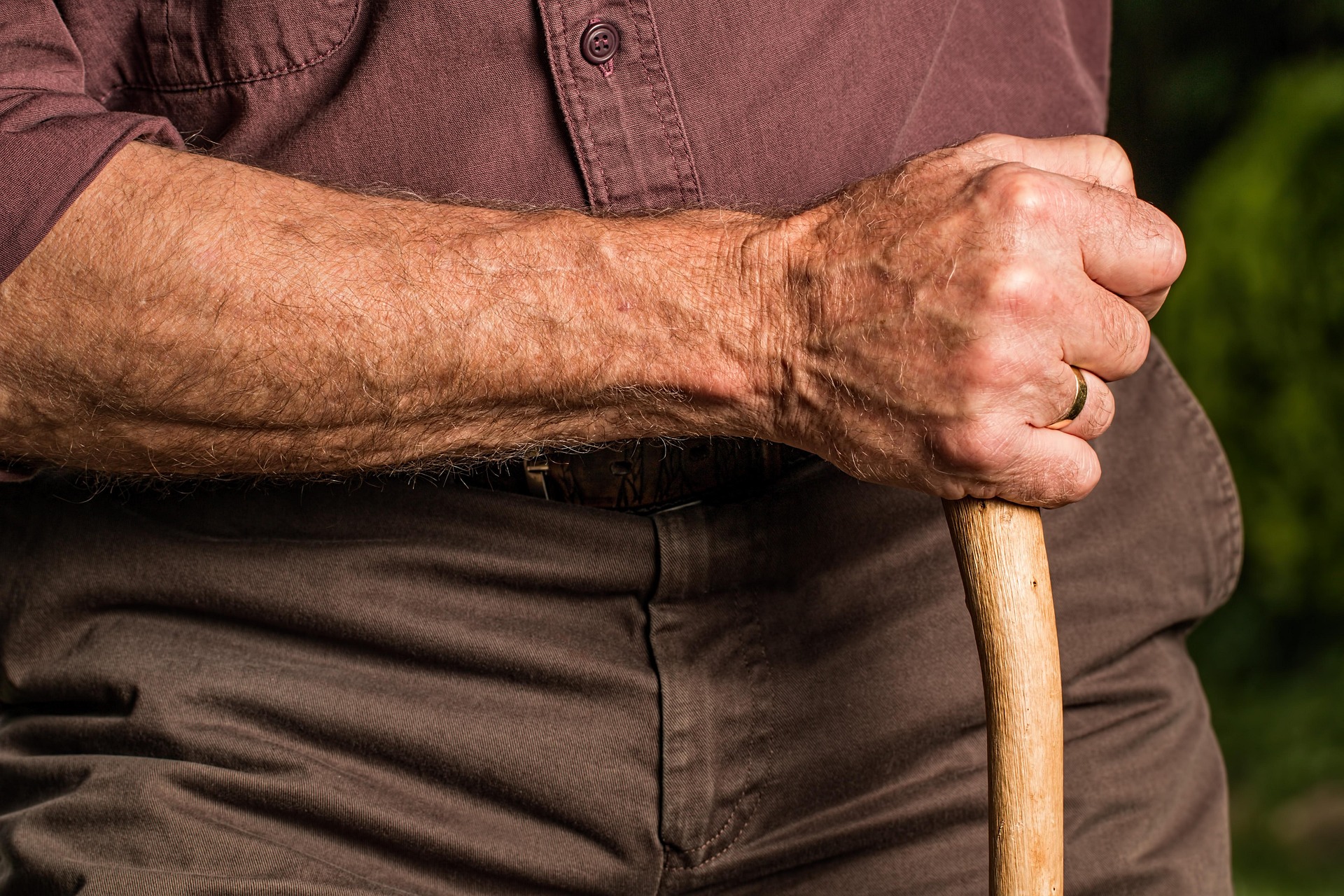

Shepherd staff: explore Greece’s mountain villages and their traditional staffs, from Pindus carvings to Leonidio cabins.
Glitsa, the traditional staff of a Shepherd in Greece’s mountainous regions, is more than a tool; it is a symbol of authority, protection, and identity, keeping tradition alive. Its history goes back centuries. In ancient Greece, the shepherd’s rod appears on pottery and in texts, while deities such as Pan are depicted holding curved rods as signs of guidance and protection.

The staff of a shepherd is not only a tool for herding or a piece of folk art; its roots are deeply connected to religious tradition. In the Bible, the shepherd’s rod symbolizes guidance, protection, and spiritual security. David writes in the Psalms: “Your rod and Your staff, they comfort me,” emphasizing the rod’s role as a means of protection and guidance. Moses carried a rod when he led the Israelites out of Egypt; with it, he performed miracles, such as parting the Red Sea and bringing water from the rock, showing that the rod was a symbol of power, authority, and divine guidance. In this way, the shepherd’s staff gains a symbolic dimension beyond its practical use; it is a means of guidance, protection, and spiritual reassurance, just like the rods of biblical heroes.

During the Byzantine and Ottoman periods, the shepherd’s staff was used daily by shepherds to guide their flocks, protect animals from wild predators, and navigate rugged terrain. Its curved handle, often made of cornelian wood or horn, allowed safe control of animals, while carvings of animals, plants, or protective symbols reminded users of its spiritual dimension, connecting practicality with spirituality.
The materials of shepherd’s staffs vary depending on geography and use. In Epirus and Pindus, cornelian and beech wood are preferred, while in Peloponnese and Crete, olive wood provides artistic texture and durability. Additionally, for special curved handles or decorative elements, horn or other local woods such as walnut and elm were sometimes employed. Shepherd’s staffs were often carved or decorated with animals, plant motifs, and protective symbols, combining functional utility with spiritual and artistic significance. No matter how small or large, curved or carved, staffs combine aesthetics and functionality, making them objects of folk art as well.

My personal experience connects the shepherd’s staff with memory and family. In Leonidio, Arcadia, where I grew up, my grandmother Dimitra and grandfather Georgios’s house had a small cabin full of supplies: firewood, potatoes, hay for the animals, and old cooking utensils. There, among all these items, hung a collection of shepherd’s staffs — small and large — on the wall. I had singled out one that seemed towering to my eyes, yet it was only about 2 meters tall. I remember the moment my grandmother found me and said, “This was your grandfather’s favorite.” The shepherd’s staff was not just a tool; it was a living story, intertwined with the life and love of a family, a small secret of tradition that left an indelible mark on me.

Today, the shepherd’s staff lives on through collections, museums, and artisans preserving the tradition. It remains a link between past and present, between rural life and Greek folk art. The strength, protection, and guidance it represents travel through time, inspiring future generations.
Ultimately, the shepherd’s staff is not merely a tool; it is a living tradition, a tool that unites memory, art, religion, and daily life. From the mountains of Pindus to the small cabin in Leonidio, shepherd’s staffs remain alive, telling stories of history, love, and the life carried by every flock, every home, and every soul, as well as the spiritual guidance that the rod has provided to humanity for millennia.


