
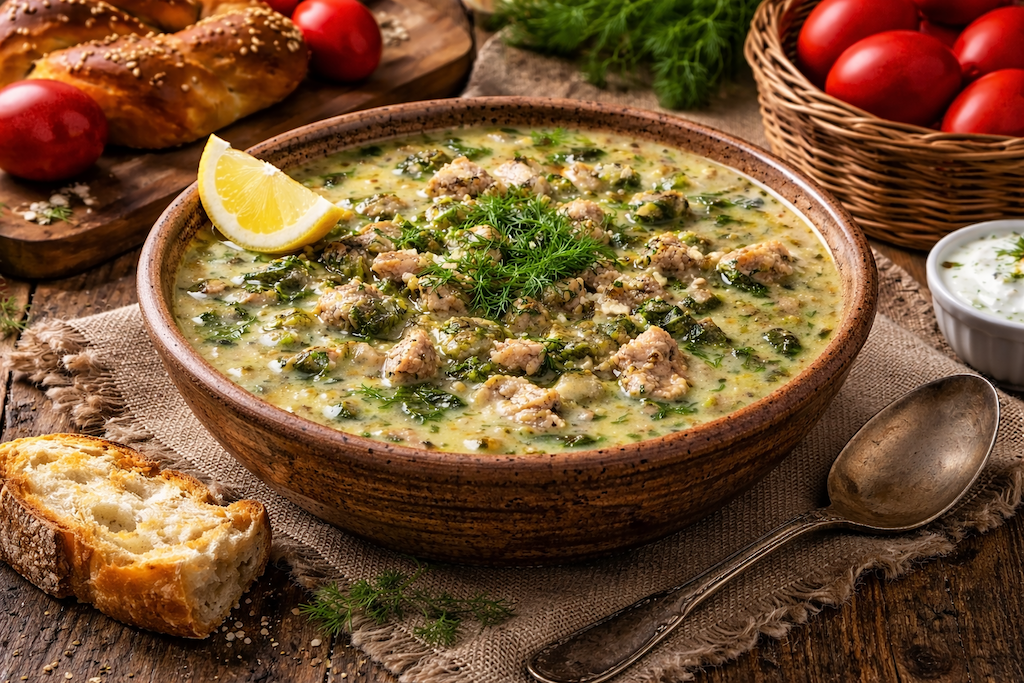

Greek Easter Food comes alive with tsoureki, red eggs, magiritsa and festive traditions, offering flavors, stories and vibrant celebrations.
The significance of Easter Food in Greek tradition
Easter is the most important religious and cultural celebration in Greece, with deep roots in history and a close connection to the Eastern Orthodox Church. Its significance goes beyond the religious dimension, touching everyday life, family, and the sense of community.
The preceding period of Lent, lasting forty days, is marked by fasting and inner preparation. This practice, established in the early Christian centuries, serves as both spiritual and physical preparation for the Resurrection, giving the faithful time to focus on faith, self-discipline, and renewal of the spirit.
Churches and the atmosphere of Holy week
During Holy week, churches fill with the fragrance of flowers and the sounds of Byzantine hymns. The decoration of the Epitaphios on Good Friday is one of the most iconic images of Greek tradition, with spring flowers carefully arranged to create a scene that combines aesthetics and symbolism.

The procession of the Epitaphios through the streets is accompanied by hymns, while the faithful follow in silent reverence. On the night of Holy Saturday, the atmosphere changes dramatically. At the sound of “Christ is Risen,” light passes from candle to candle, filling the space with radiance and marking the transition from mourning to joy. The scent of candles, the chanting, and the soft murmurs of participants create a strong sense of community, accompanying both spiritual and emotional experience.
Magiritsa and the transition from fasting

Magiritsa is the first dish consumed after the Resurrection, symbolizing the end of fasting. Its presence on the Easter table is recorded in many folklore sources as a practice that ensures a smooth return to richer foods.
It is prepared using lamb offal, finely chopped and cooked with fresh herbs, lettuce, and rice. Egg-lemon sauce added at the end gives the dish its characteristic texture and flavor. The balance of ingredients results in a dish that is both light and nutritious. Eating it after midnight is not merely a dietary habit but a ritual signaling a shift in rhythm and mood. The aroma of herbs and lemon blending with the warmth of the soup fills the house and invites family members to gather around the table.
Beyond magiritsa, Easter table often features other traditional dishes that enrich the celebration. Kokoretsi, made from lamb intestines and aromatic herbs, roasted on the spit, fills homes with a scent that heralds Easter Day. Roast lamb remains the centerpiece, symbolizing abundance, family warmth, and festive gathering. Regional Easter sweets, such as lalaggia or sesame pasteli on certain islands, offer unique local character and variety to the celebration.
Red eggs and the symbolism of life

Red eggs are among the most powerful symbols of Greek Easter. Dyeing them on Holy Thursday is a nationwide custom, with minor regional variations. The red color represents the blood of Christ, while the egg symbolizes life and rebirth. This interpretation appears in both theological analyses and popular tradition.
Cracking the eggs on the night of the Resurrection is accompanied by the exchange of wishes, embodying the victory of life over death. In many regions, the first egg is kept on the home’s icon shelf as a symbol of protection. Today, the tradition continues in large families, while the use of lanterns and sharing photos on social media allows the celebration to reach those who cannot attend in person, keeping the community alive even digitally.
Tsoureki: History & aromas

Tsoureki is a key element of the Easter table, associated with festivity and abundance. It belongs to the category of enriched breads, where the use of eggs, butter, and milk creates an exceptionally fluffy texture. Its uniqueness comes mainly from its aromatic elements. Mastic and mahleb from Chios give it a signature scent, a hallmark of Greek confectionery.
The braid formed before baking symbolizes unity, while the red egg often placed at the center reinforces the connection to the Resurrection. The smell of freshly baked tsoureki on Easter morning fills homes, inviting family members into a festive atmosphere full of warmth and anticipation.
Folk traditions and local variations

Greek Easter takes on different expressions across the country, forming a mosaic of customs that enrich the overall experience. In Corfu, on Holy Saturday morning, the “botides” custom takes place, where clay pots are thrown from balconies, creating a loud sound associated with renewal and the removal of evil spirits. In Chios, the Resurrection is accompanied by the rocket war, a spectacular event between two parishes firing homemade rockets, creating an impressive nighttime display with deep historical roots.
In Crete, the burning of Judas on the night of the Resurrection is a strongly symbolic act accompanied by gatherings, music, and festive atmosphere. In Santorini, particularly in Pyrgos, Good Friday is illuminated by thousands of lanterns, creating a unique atmosphere during the Epitaphios procession. In Patmos, the Holy Thursday Washing of the Feet ceremony reenacts one of the most important events in Christian tradition and is performed with great solemnity.
Each local custom combines aesthetics, sound, and action, while carrying deep historical and symbolic meaning. The community actively participates, creating vivid experiences that connect the past with the present.
The easter table as a hospitality experience
The Easter table is a place of gathering and communication. Flavors serve as an excuse for togetherness, and the length of the meal becomes an experience that goes beyond its nutritional dimension. The aromas of traditional dishes, the sense of community around the table, and the festive atmosphere turn the meal into a ritual where hospitality is expressed authentically through sharing and participation. Food becomes a carrier of memory, emotion, and collective identity.
Greek Easter food is a living expression of Greek identity. Through magiritsa, red eggs, tsoureki, and other traditional dishes, a world full of symbolism, history, and cultural continuity emerges. This experience extends beyond the table, embracing the atmosphere of churches, local traditions, the senses, and collective participation. It remains authentic and timeless, retaining its power through the ages.

