
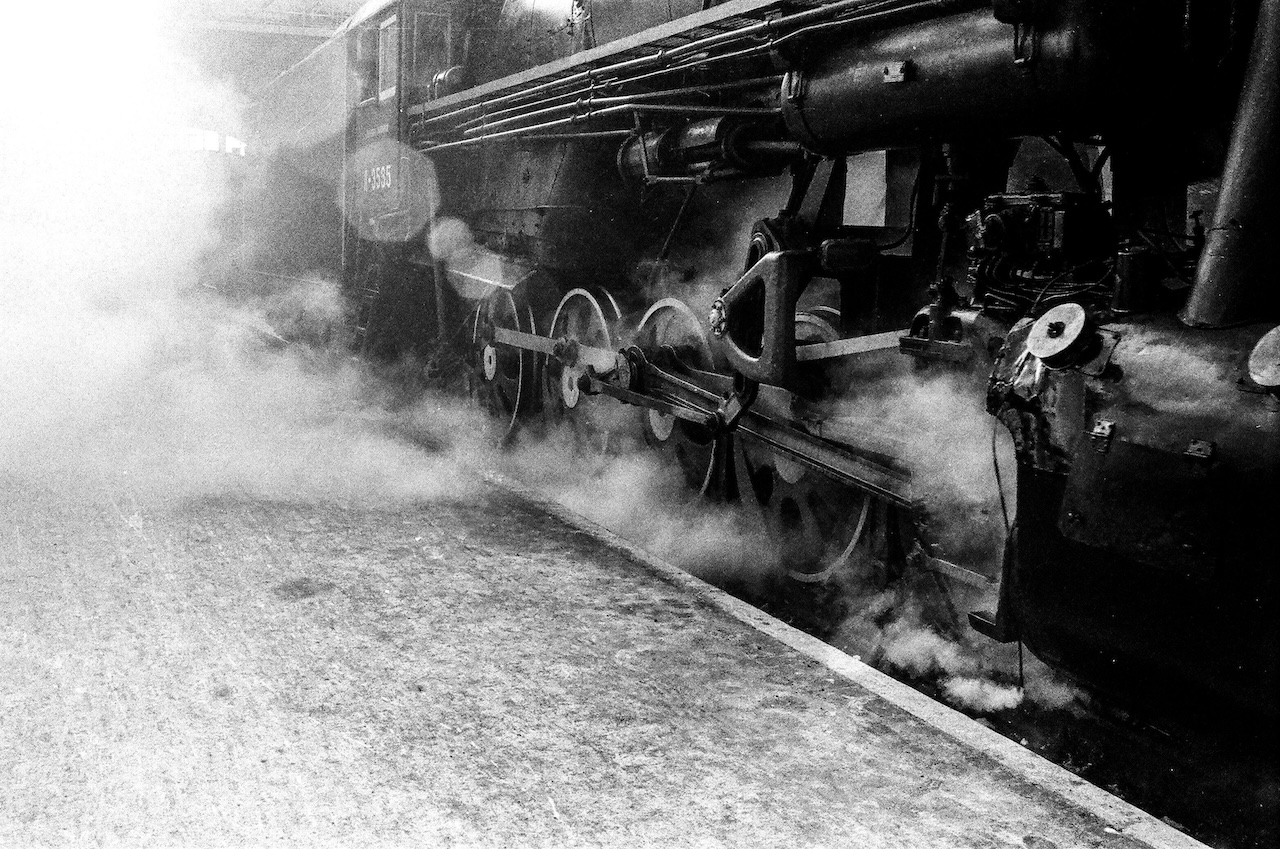

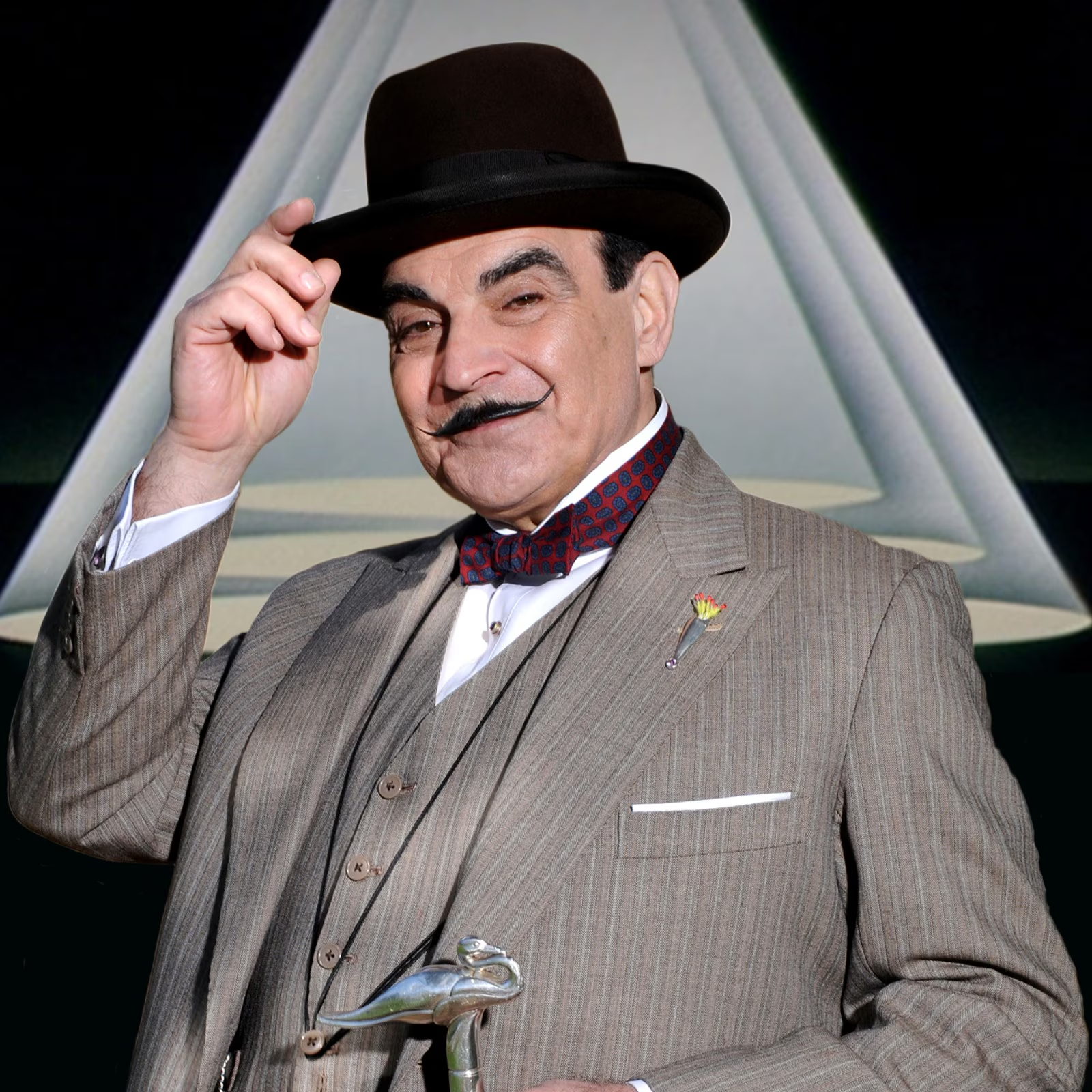
Historic railway tours take you from the Diakopto–Kalavryta Rack Railway to the Pelion train, a journey Hercule Poirot would surely love.
When Iron Tracks bound a young nation (and Poirot raised an eyebrow)
Historic railway tours in Greece offer more than just travel between cities; they are journeys through time, landscape, and memory. From the Diakopto–Kalavryta Rack Railway to the scenic Pelion train, these historic railway tours allow travelers to imagine what Hercule Poirot would love and observe, from the ingenuity of engineering to the quiet poetry of each mountain curve and valley.

Greece’s first railway line opened in 1869, linking Athens with the port of Piraeus. One can picture Poirot, immaculate moustache in place, traveling on that inaugural journey, peering out the polished wooden carriage windows, thinking: “Mon Dieu, the elegance of the train is admirable… but where is the comfort?” It marked one of Europe’s earliest urban rail connections and signaled Greece’s entrance into an industrial age reshaping the continent.
From that first stretch, the network gradually expanded. By the early 20th century, Athens connected with Thessaloniki, binding south and north while strengthening economic and political cohesion. Railways carried agricultural goods, marble, tobacco, passengers, ambition, migration, and memory.
The Diakopto–Kalavryta Rack Railway: Engineering against the Gorge
Few journeys capture the drama of Greece like the Diakopto–Kalavryta line. Modern travelers can step aboard one of the country’s historic railway tours, tracing the steep slopes of the Vouraikos Gorge, while imagining Poirot noting every detail, every bridge, and tunnel.
Inaugurated in 1896, this narrow-gauge (750 mm) line was engineered to conquer gradients impossible for conventional adhesion railways. Its distinctive rack-and-pinion system allows trains to climb steep slopes, carving a slow, immersive ascent through rock and shadow. Springtime brings rushing water, wildflowers, and the gorge alive with color — a landscape that even Poirot would admire.
The journey is less about speed and more about atmosphere. Even without grand luxury cars, elegance emerges in the rhythm of motion, the echo of wheels on iron, and the faint scent of timber and steam. These historic railway tours invite travelers to step into the past while savoring every moment.

The Pelion Train: “Moutzouris” and the art of Slow travel
In Thessaly, the Pelion Railway offers another living fragment of Greece’s railway heritage. Constructed between 1892 and 1903, the line climbs gradually from Volos to the mountain villages. Affectionately nicknamed “Moutzouris,” it still runs with diesel traction, yet the charm of slow travel remains.
The Pelion train is one of Greece’s most picturesque historic railway tours. Olive groves, stone bridges, and the soft rhythm of wheels create a suspended sense of time. Poirot, fastidious as ever, might disapprove of soot and simplicity, yet he would admire the deliberate elegance and quiet poetry of this journey.
Travelers of that era did not merely move between places; they pursued encounters with destiny, reunions with lost loves, new opportunities, and the thrill of discovery. Each journey along these lines opens wings of curiosity and wonder, letting the rhythm of the rails carry dreams forward.
Stations that wait: Peloponnese and Nafplio
At its height, the Peloponnese metre-gauge network was one of Europe’s most extensive narrow-gauge systems. The station in Nafplio, constructed at the end of the 19th century, remains a refined example of railway architecture. Platforms without departures, shuttered windows, and rusted rails evoke a quiet fin-de-siècle European charm.
Even Poirot would find poetry in such stillness: the absence of movement amplifying the anticipation of journeys past and yet to come. For travelers, these stations offer a moment of reflection, a pause to imagine stories, connections, and adventures once carried along the rails.

Was there ever a Greek luxury train?
Greece never hosted a permanent luxury rail brand like the Orient Express. Yet, elegance existed. First-class carriages featured polished wooden interiors, upholstered seating, and private compartments. Poirot, meticulous as ever, might murmur: “Ah, enfin, some attention to comfort — though still missing a proper chandelier!”
Occasional heritage journeys today allow travelers to experience fragments of that refinement, bringing the romance of early 20th-century train travel to life.
The Romance of enduring motion
Historic railway tours in Greece are not only about transport; they are about narrative, atmosphere, and the poetry of movement. The slowing of a carriage before a mountain curve. The echo of steel against iron. The warmth of timber in a quiet station.
For romantics, the Diakopto–Kalavryta line and Pelion heritage railway remain gateways into a slower rhythm. For Hercule Poirot, even a modest Greek train becomes an adventure: a puzzle of terrain, a story in every curve, and a reminder that elegance often resides in observation, if not in upholstery.

In Greece, the rails still tell stories, some move forward, others rest in silence, all part of a landscape where geography demanded ingenuity and where travel, at its best, feels like a ceremony.

