
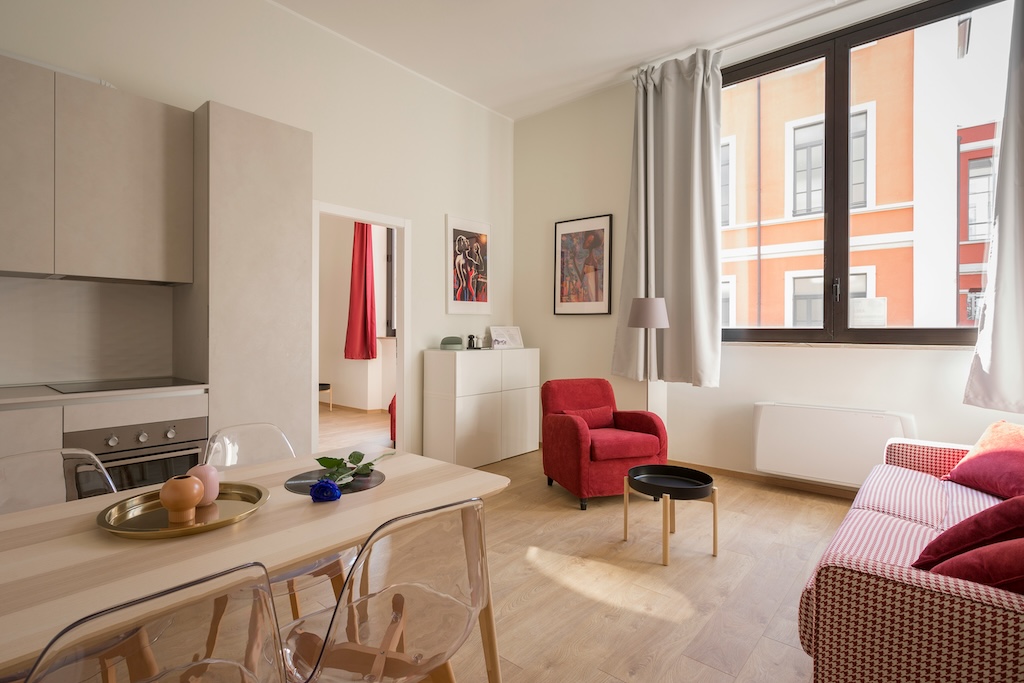

Airbnb, Vrbo or serviced apartments? See how hospitality changes and why travelers abandon hotels for more flexible and affordable options.
Until a few years ago, the travel experience was almost synonymous with hotels. From a short city break to long vacations, most travelers were looking for an organized environment with infrastructure, services, and staff available to meet every need. Today, however, the picture of hospitality is changing rapidly. Platforms such as Airbnb and Vrbo have turned serviced apartments and vacation rentals into one of the strongest trends in modern tourism.

What was once considered an alternative form of accommodation for a few is now a primary choice for millions of travelers worldwide. Families, digital nomads, couples, as well as professionals traveling for longer periods of time are increasingly choosing apartments, houses, and serviced apartments instead of traditional hotels. This shift is not only related to cost. It is connected to a broader transformation in the way people travel, work, and organize their daily lives even when they are away from home.
From a mattress in a living room to a global travel economy
Airbnb started in 2008 when Brian Chesky and Joe Gebbia decided to rent out air mattresses in their apartment in San Francisco, during a period when they were struggling to pay rent. The idea quickly evolved into one of the largest travel platforms in the world, effectively creating a new market around short-term rental housing.
On the other hand, Vrbo, which originally stood for Vacation Rentals by Owner, followed a different philosophy. The platform focused more on entire homes and vacation houses, mainly targeting families and larger groups looking for more private and “traditional” vacation rental experiences.
Although the two platforms are often compared today, they actually target different audiences in many cases. Airbnb became more associated with urban travel culture, city breaks, and the “live like a local” experience, while Vrbo remained closer to family vacations and larger holiday homes.
Serviced apartments are changing travelers’ needs
The rise of serviced apartments is not accidental. In recent years, travelers began to seek more than just a place to sleep. The need for larger spaces, kitchens, laundry facilities, remote work capabilities, and a more “everyday-like” living experience significantly changed consumer priorities.
A serviced apartment can function simultaneously as a living space, a workspace, and a temporary everyday home. For a traveler staying several days in a destination, the ability to cook, organize their schedule more flexibly, or share costs with friends and family often becomes more important than traditional hotel amenities.
For a family traveling for ten days, having a kitchen and laundry can significantly reduce the overall cost of the trip. For a remote worker, an apartment with a desk and stable Wi-Fi is often more useful than a luxurious hotel lobby.
The pandemic further accelerated this transition. In interviews with outlets such as Fortune and McKinsey, Airbnb CEO Brian Chesky has stated that remote work and longer-duration travel have permanently changed people’s relationship with accommodation and travel. Guests are no longer traveling only for a few days of leisure but often move for weeks or even months, combining work and personal life.
He has also acknowledged that Airbnb’s rapid growth created challenges around trust, safety, and the overall customer experience. For this reason, the company invested more in protection and verification features, aiming to strengthen reliability for both hosts and guests.
The travel experience is not the same for everyone
Despite the popularity of serviced apartments, hotels still play a highly important role in hospitality. And this is not only about luxury or infrastructure. A hotel offers something that remains extremely important for many travelers: organized support and a sense of security.

Guests know there is staff available in case of a problem, whether it concerns their stay or a more difficult situation that may arise during the trip. From lost documents and personal belongings to transportation issues or emergencies, many travelers feel more secure knowing there is an organized team they can immediately turn to.
At the same time, hotels invest heavily in new facilities, branded restaurants, spas, bars, and complete hospitality experiences. For many guests, this experience remains a key part of their vacation.

However, the economic reality of recent years significantly affects travelers’ choices. Rising living costs, uncertainty around employment, geopolitical tensions, and overall pressures on the global economy lead many people to seek more flexible or affordable accommodation solutions.
In this environment, a serviced apartment may feel more accessible, especially for families or groups who want to reduce expenses by handling part of their daily needs themselves. The ability to cook, share spaces, and enjoy greater flexibility often translates into a lower overall travel cost.
Cities are starting to react
The rapid growth of short-term rentals has also sparked a major debate in cities in recent years. In destinations such as Barcelona, Amsterdam, and New York, stricter rules for short-term rentals have already been implemented or are being considered, as local authorities link the rise of vacation rentals with increasing rents and pressure on the housing market.
The issue is no longer just about tourism but also about how modern cities try to balance tourism growth with the daily lives of permanent residents.
What users really say about Airbnb and Vrbo
The discussion around the two platforms remains intense even within host and traveler communities. In exchanges on Reddit, many hosts report that Airbnb still provides a significantly higher volume of bookings, mainly due to its recognition and global reach.
At the same time, there are also many who believe that Vrbo attracts a different type of traveler, often more family-oriented and focused on quiet, longer vacations. Many hosts describe Vrbo guests as more “traditional” travelers looking for entire homes rather than just a short stay.

Airbnb itself has also faced criticism over time regarding issues such as cleaning fees, inconsistency in property quality, or the need for better verification of users and hosts. Brian Chesky has publicly acknowledged in interviews that the platform’s rapid growth created challenges around trust, safety, and the overall customer experience, which is why the company invested more in protection features such as AirCover.
On the other hand, Vrbo is often perceived as a more “quiet” platform, but with a smaller number of available listings in many markets. This means that a traveler’s experience can vary significantly depending on the destination, the type of accommodation, and personal needs.
Frequently Asked Questions
Is Airbnb cheaper than a hotel?
What is the difference between Vrbo and Airbnb?
Airbnb offers a wider variety of accommodations, from private rooms to apartments and unique stays. Vrbo focuses mainly on entire homes and vacation houses, targeting more families and larger groups.
Airbnb or hotel: which is better overall?
It depends on the type of trip. Hotels offer services, security, and immediate support, while serviced apartments often provide more space and lower costs for longer stays.
Are serviced apartments safe?
In most cases, yes, especially when professionally managed. However, the experience varies, so it is important to check reviews, cancellation policies, and host reliability.
Why do travelers choose apartments over hotels?
For more flexibility, space, and a “home-like” experience. Kitchens, laundry facilities, and the ability to stay long-term make them especially popular among families and remote workers.
What is most suitable for families?
Serviced apartments and Vrbo are often more practical due to space and privacy, while hotels excel in services, support, and organized amenities.
The future of hospitality does not belong exclusively to anyone
The rise of serviced apartments does not necessarily mean the end of hotels. Instead, it shows that the travel industry is becoming increasingly multi-dimensional. The modern traveler does not always look for the same thing. Sometimes they prefer the safety, services, and support of a hotel, while other times they choose the flexibility, space, and independence of an apartment.
What is truly changing is the philosophy of travel. People are traveling more often, staying longer, working remotely, and trying to adapt travel to their financial capacity and lifestyle. In this new environment, platforms such as Airbnb and Vrbo do not simply function as alternative accommodation options. They reflect a deeper shift in how we perceive hospitality, everyday life, and the travel experience itself.

Perhaps the real question is not whether Airbnb or Vrbo will replace hotels. The real question is how the traveler themselves is changing. In an era where work, daily life, and travel increasingly blend into one another, hospitality is no longer just about a room. It is about how people choose to live, even temporarily, in a new place.

