
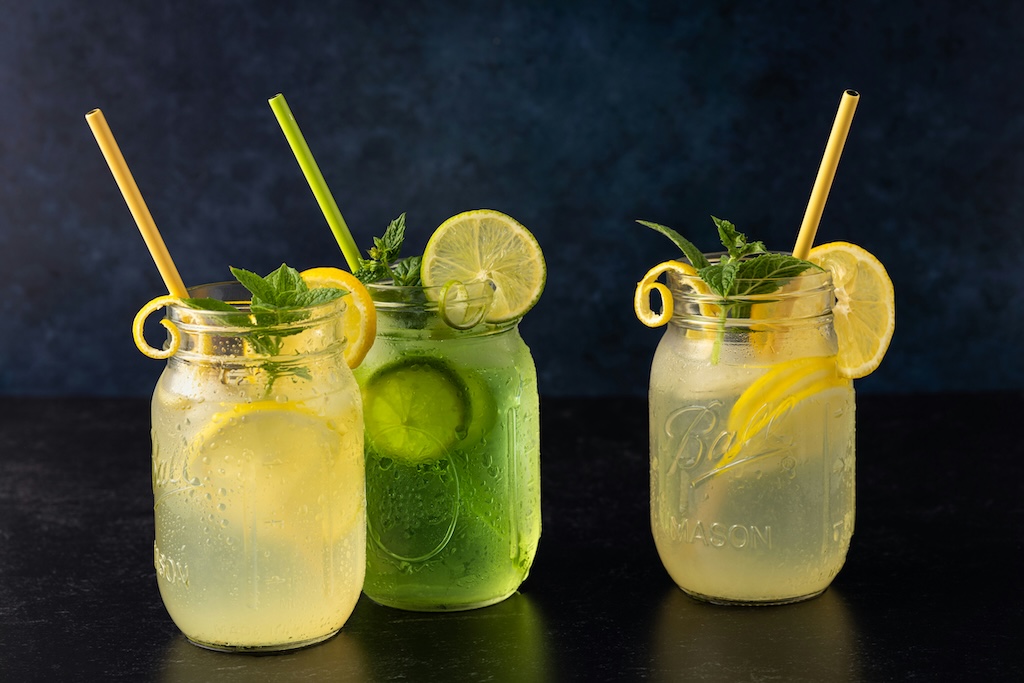

Summer non-alcoholic drinks featuring homemade lemonades, and refreshing mocktails that bring the essence of a Greek summer into every glass.
The Greek summer is not only captured in destinations, but also in small everyday moments: a glass filled with ice, the aroma of herbs drifting through the kitchen, a sip that evokes light and sea.
In recent years, non-alcoholic summer drinks have gained a distinct place in modern gastronomy. Mocktails, homemade lemonades, and herbal infusions made with Greek botanicals are not just alternative choices; they are a creative way to embrace seasonality and the richness of the Greek natural landscape.
Without complex techniques or hard-to-find ingredients, every drink can become a small experience: from Chios to Crete, from mountain regions to the islands, Greece offers aromas that fit perfectly into a glass.
What you will discover in this guide
🍋 Easy non-alcoholic summer drinks
🌿 Recipes with Greek herbs and seasonal fruits
🥂 Homemade refreshing mocktail ideas
🍯 Combinations with honey, lemon, and natural aromas
💡 Small tips for better serving
Mastic & lemon mocktail

From the mastic trees of Chios, mastic resin is one of the most distinctive products of the Greek land, internationally recognized for its unique aromatic profile.
In this mocktail, mastic meets lemon and sparkling water, creating a drink with a strong identity and a clean, summery character.
Ingredients
- 1/2 tsp natural mastic (or mastic syrup)
- 200 ml cold sparkling water
- Juice of 1/2 lemon
- 1 tsp honey or agave syrup
- Ice
- Mint leaves for garnish
Method
Dissolve the mastic in a small amount of lukewarm water or use ready-made syrup. Add lemon juice and honey to a glass filled with ice, stir well, and top up with sparkling water. Stir gently and garnish with mint.
Did you know?
Chios mastic is a Protected Designation of Origin (PDO) product and is produced exclusively in the southern part of the island.
Inspiration
Mastic has entered modern Greek mixology, with bars such as Baba Au Rum using it in creative cocktails and mocktails, highlighting its uniqueness.
Lemon verbena mocktail

Lemon verbena, with its distinct lemon-like aroma, is one of the most beloved aromatic plants in Greece. It is widely cultivated and commonly used in herbal teas and homemade drinks.
In this version, lemon verbena becomes the base of a light and aromatic mocktail with natural freshness.
Ingredients
- 150 ml cold lemon verbena infusion
- Juice of 1/2 lemon
- 1 tsp thyme honey
- 80 ml sparkling water
- Ice
Method
Prepare the infusion and let it cool completely. Mix with lemon and honey, add ice, and top with sparkling water.
Did you know?
Lemon verbena (Aloysia citrodora) originates from South America but is widely cultivated in Greece due to its aroma.
Inspiration
The use of fresh herbs in simple drinks is a key trend in modern Greek gastronomy, as seen in creative bars such as Line Athens, which emphasize seasonality and natural aromas.
Mountain tea & Orange mocktail

Mountain tea (Sideritis) is one of the most iconic Greek herbal infusions, deeply connected to the country’s mountainous tradition.
Combined with orange, it gains a brighter character and becomes a refreshing summer drink.
Ingredients
- 200 ml cold mountain tea infusion
- 60 ml orange juice
- 1 tsp honey
- Ice
- Optional: sparkling water
Method
Mix the infusion with orange juice and honey. Serve over ice and optionally top with sparkling water.
Did you know?
The Sideritis genus includes many species that grow in mountainous regions of Greece.
Inspiration
Seasonality is a core principle in modern mixology, both internationally and in the Greek bar scene.
Homemade lemonades & fruity Greek flavors
In the second part of the guide, attention shifts to more familiar Greek summer flavors. Homemade lemonade, sour cherry syrup drink, and seasonal fruits are connected to tradition while being reinterpreted through simple, modern combinations.
Thyme Honey lemonade

Lemonade is perhaps the most iconic summer drink in Greece. From island courtyards to family tables, it is associated with freshness and hospitality.
In this version, thyme honey adds depth and aromatic complexity, transforming a simple lemonade into a more refined drink.
Ingredients
- 3 fresh lemons
- 600 ml cold water
- 2 tbsp thyme honey
- A few mint leaves
- Ice
Method
Squeeze the lemons and mix the juice with honey until dissolved. Add cold water and serve with ice and mint.
Did you know?
Thyme honey is produced in many regions of Greece, especially on islands and dry mountainous areas where thyme grows naturally.
Inspiration
Modern gastronomy brings simple ingredients like honey and lemon back into focus, giving them a new role in refreshing drinks.
Sour Cherry sparkling drink

Sour cherry drink (vysinada) is a classic Greek summer refreshment, deeply rooted in traditional cuisine.
Ingredients
- 50 ml sour cherry syrup
- 180 ml sparkling water
- A few drops of lemon juice
- Ice
- Mint (optional)
Method
Add syrup and lemon juice to a glass filled with ice. Top with sparkling water and stir gently.
Did you know?
Traditionally, sour cherries are cooked with sugar and lemon to create a thick syrup that keeps for months.
Inspiration
Traditional Greek flavors find new life through simple techniques without losing their authentic character.
Chamomile & Peach drink

Chamomile is one of the most well-known Greek herbal infusions, with a soft floral profile. Combined with peach, it creates a balanced summer drink.
Ingredients
- 200 ml cold chamomile tea
- 1 ripe peach
- 1 tsp honey
- A few drops of lemon juice
- Ice
Method
Blend the peach and mix it with honey and lemon. Add cold chamomile tea and serve over ice.
Did you know?
Greece is a major peach producer, with Imathia and Pella being key cultivation regions.
Inspiration
The combination of herbs and fruit is a major trend in contemporary creative cuisine.
Lemon & Sage lemonade

Sage, with its intense aromatic profile, is traditionally used in many regions of Greece, especially on islands and in mountainous areas.
In this lemonade, it adds a more earthy and aromatic character.
Ingredients
- 2 lemons
- 500 ml water
- 2 tbsp honey
- 3–4 sage leaves
- Ice
Method
Mix lemon juice with honey, add water and sage leaves. Let it infuse for a few minutes, then serve over ice.
Did you know?
Salvia fruticosa is one of the most characteristic sage species found in Greece.
Inspiration
Aromatic herbs can transform a simple lemonade into a more complex sensory drink.
Editor’s choice: Watermelon & Mint mocktail

Watermelon is perhaps the most iconic fruit of the Greek summer, associated with courtyards, family moments, and seaside afternoons.
Ingredients
- 250 ml fresh watermelon juice
- Juice of 1/2 lime
- 5–6 mint leaves
- 50 ml sparkling water
- Ice
Method
Blend the watermelon and strain the juice. Mix with lime and mint in a glass with ice, then top with sparkling water.
Did you know?
Watermelon is over 90% water, making it ideal for refreshing summer drinks.
Inspiration
Simplicity is often the strongest element in modern gastronomy.
Small tips for perfect serving
Non-alcoholic summer drinks become even better when served properly. Small details make a big difference in the experience.
Chill your glasses
A cold glass helps maintain the drink’s temperature longer.
Use large ice cubes
They melt more slowly and do not dilute the flavor.
‘Wake up’ the herbs
Gently press mint, sage, or lemon verbena leaves before adding them to release their aroma.
Add sparkling water last
This preserves the bubbles and freshness.
Focus on seasonality
Ripe fruit and fresh herbs define the final result.
Small tip
Most summer drinks develop a stronger aroma when freshly squeezed juices and just-picked herbs are used. A simple detail can completely change the outcome.
FAQ
What are mocktails?
They are non-alcoholic drinks based on fruits, herbs, juices, and sparkling water
Which Greek herbs are commonly used in summer drinks?
Lemon verbena, sage, mountain tea, mint, and chamomile.
How long does homemade lemonade last?
Usually 2–3 days in the refrigerator, depending on ingredients.
Can sugar be replaced with honey?
Yes, honey is an excellent natural alternative and adds a more aromatic profile.
Which fruits are ideal for mocktails?
Watermelon, peach, sour cherry, lemon, and orange.
Are these suitable for children?
Yes, all drinks in this guide are alcohol-free and suitable for children.
The Greek summer is expressed through simple, everyday moments: a glass filled with ice, the aroma of herbs filling the kitchen, a fruit at its peak ripeness.
The flavors presented in this guide are based on ingredients from the Greek natural landscape and combinations that can be easily recreated at home. From honey lemonade to watermelon and herb mocktails, every drink shares a common theme: simplicity and seasonality.
With just a few ingredients and small daily rituals, a home can be filled with aromas that evoke a Greek summer—from island courtyards to mountain landscapes and seaside afternoons.


magnificent put up, very informative. I wonder why the
other specialists of this sector don’t understand this.
You should proceed your writing. I’m confident, you’ve a great readers’ base already!