
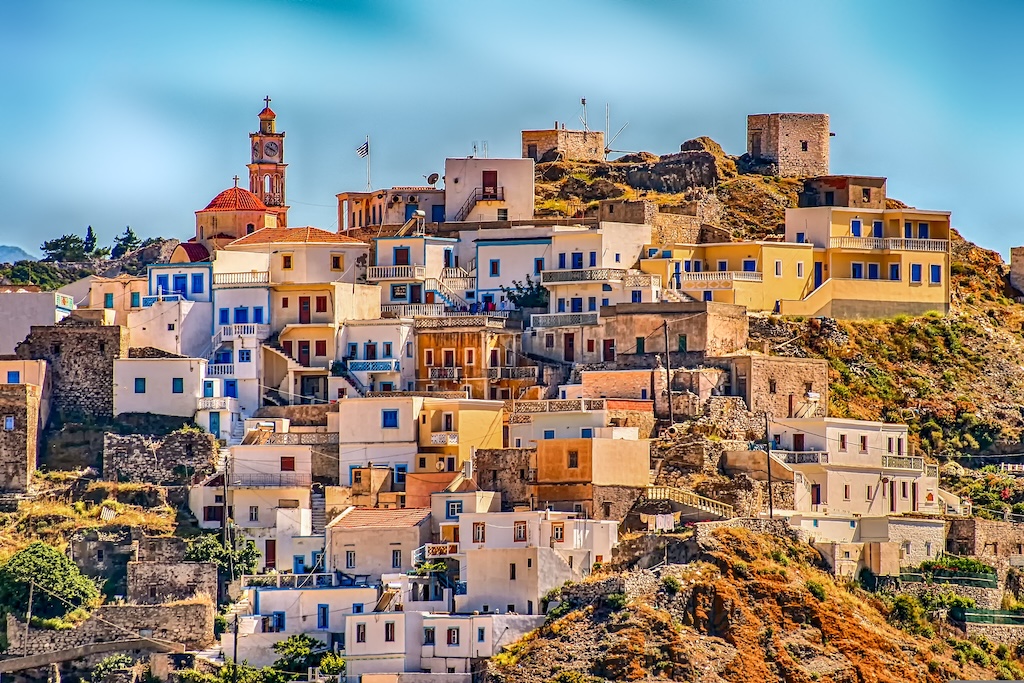

Hidden Greek islands reveal Karpathos, a true gem where pristine beaches, scenic trails and authentic traditions await far from the crowds.
In an era, where destinations like Santorini and Mykonos are associated with mass tourism, more and more travelers are seeking authentic Greece — experiences, where local life, tradition, and history have retained their identity. Among the hidden Greek islands, Karpathos remains such a destination. It is not merely a beautiful place with stunning beaches but a destination where nature, history, trails, and everyday life create an experience rarely found elsewhere.

History through centuries and landscapes
Karpathos has been continuously inhabited since the Neolithic period, with evidence of human presence dating back to 4000–3000 BCE. Its significance in ancient times is also reflected in references in Homer, indicating that the island was known and active within the ancient Greek world. In the area of Pigadia, today the island’s capital, remains of the ancient city of Karpathos can be found, including ruins of the acropolis, temples, and public buildings, showcasing its importance in antiquity.
In Arkasa, known in antiquity as Arkesia, lies Palaiokastro, where visitors can see fortifications and building remains dating from the Archaic to the Byzantine period, along with a discovered Early Christian basilica. For history enthusiasts, these sites are not museum exhibits; they are living spaces preserving archaeological value within the natural landscape.

Ιn the northern part of the island, near Olympos, lies ancient Vrykounta, one of the most significant archaeological sites. There, ruins of the ancient city, remnants of Early Christian monuments, and a sanctuary dedicated to Poseidon highlight continuous habitation from antiquity through the early Christian centuries. A short distance from the coast lies the islet of Saria, which in antiquity was connected to Karpathos and also contains archaeological traces dating back to the Neolithic period.
Medieval pirate raids led inhabitants to settle in more mountainous areas, shaping the island’s current character, where history is not hidden in museums but embedded in villages and connecting trails.

Olympos: A living legend of tradition
The village of Olympos is one of Greece’s most unique and authentic settlements. Its centuries-long isolation allowed life and traditions to remain nearly untouched by time. In Olympos, women still wear traditional costumes daily, and the local dialect retains features reminiscent of earlier Greek eras. Life here is not a staged attraction for visitors but a way of living, with social structures and customs forming the most vibrant part of the experience.
Daily life revolves around the community and religion, as well as rhythms determined by festivals, memories of elders, and the belief that traditions connect the present generation with those that came before.
Hiking in Karpathos: Discover the island on foot
What truly sets Karpathos apart is the opportunity it gives visitors to explore it on foot. The island has dozens of marked trails, many of which follow old routes used by residents to move between villages, passing through fields, watermills, quarries, and pastures.
These trails pass through gorges, hills, mountains, and beaches. Hiking from Aperi to Achata beach, visitors encounter constantly changing landscapes, with panoramic views of the Aegean dominating the scene. The path to Limniatis cave reveals a lesser-known side of the island, with geological interest where rock and sea speak their own language.
In northern Karpathos, hikes around Olympos combine natural beauty with history. The trail from Avlona to ancient Vrykounta offers an impressive experience, where a natural route ends at a historic site with remarkable archaeological features. Climbing to Palaiokastro in Arkasa allows visitors to admire the island’s expanse and connect with its historical character.
Beaches and landscapes that captivate

Karpathos’ geomorphology largely shapes the island’s natural beauty. From steep cliffs plunging into turquoise waters to calm, secluded sandy beaches, Karpathos offers a variety of coastal landscapes that captivate both sea lovers and those seeking tranquility away from crowds.
Beaches such as Apella and Kyra Panagia are among the most impressive in Greece, with sparkling waters and gently lying pebbles.
The island’s natural experience extends beyond the sea and trails. The entire landscape maintains authenticity, unspoiled by mass tourism, and remains closely connected to the natural environment.

Gastronomy: Flavors that tell stories
Karpathos’ cuisine is deeply tied to island life and traditions. It is not “tourist cuisine.” The culinary philosophy emphasizes local production and seasonal ingredients. The signature dish is makarounes, handmade pasta served with caramelised onions and local cheeses such as sitaka, a fresh cheese emblematic of Karpathos flavors.
Traditional pies, legumes, and local meat dishes like goat complement a cuisine based on simple, pure, and authentic flavors. Honey-based sweets, often linked to celebrations, complete the island’s gastronomic experience within the Dodecanese culinary scene.
Festivals and Feasts: The heart of cultural life
The most notable aspect of Karpathos’ events is that they are not tourist “festivals” with tickets and organized events but living expressions of residents’ social and religious life.
The main celebration is the Dormition of the Virgin Mary on August 15. Festivities in Olympos and other villages begin with religious services and continue with shared meals, music from lyres and lutes, and traditional dances lasting late into the night. The festival is a collective experience, where people of all ages, visitors and locals alike, share food, song, and dance.
Similar celebrations occur on other summer dates, such as August 6 for the Transfiguration and August 10 for Saint Panteleimon, with each village following its own traditions. Beyond religious festivities, the island hosts cultural events like the Karpathos Climb & Adventure Fest, combining hiking, climbing, and outdoor activities with music and local flavors, highlighting the region’s natural wealth.
Even before summer, such as during Holy Week, Karpathos maintains a rich cultural life with rituals, memorial services, and traditional customs connecting visitors to the island’s rhythm and soul.
An authentic “hidden gem”
Karpathos remains a destination faithful to its roots, offering experiences focused on tradition, nature, and daily life. For travelers seeking experiences beyond photos and crowded spots, Karpathos is more than an island — it is a place offering genuine contact with Greece as it once was and continues to be for those, who wish to know it truly.

