
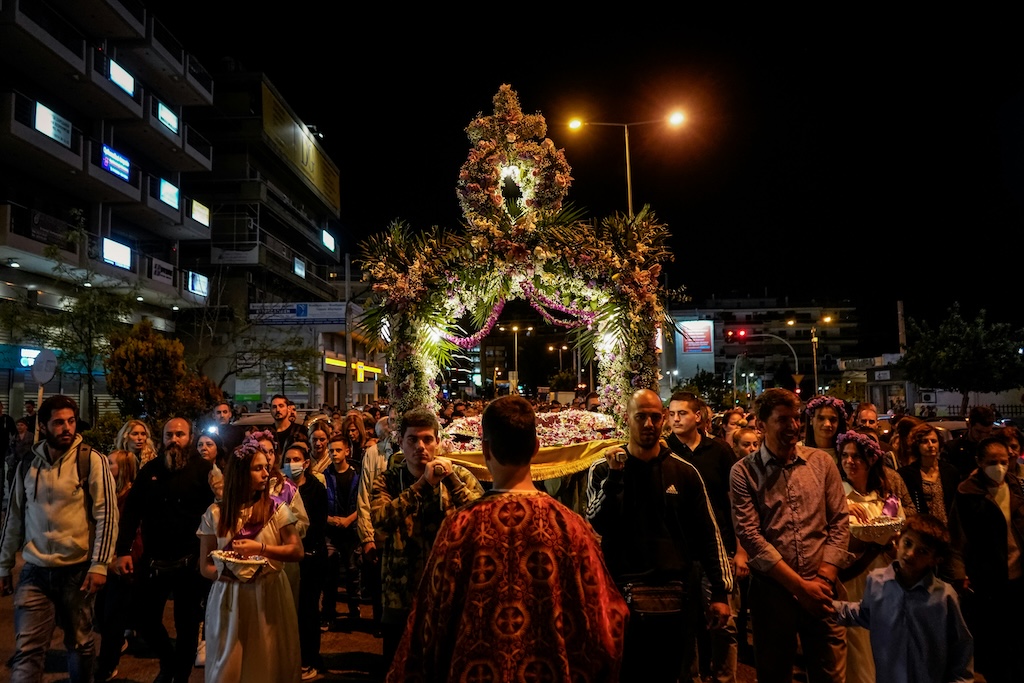

Easter in Greece comes alive with rocket wars, pot smashing, and unforgettable local traditions that make the celebration one-of-a-kind.
Easter in Greece: 12 Unique Greek Easter Traditions Across the Country
Easter in Greece is an experience that blends religious devotion, folk tradition, and unique local culture. Each region has developed its own customs, preserved for centuries, offering visitors unforgettable sights and powerful emotions. From the explosive rocket war in Vrontados of Chios to the colorful pots in Corfu, traditions unfold with colors, sounds, and flavors, reflecting the history and spirit of the Greek Resurrection.

Greek cuisine is an integral part of the celebration. Roasted lamb, magiritsa soup, tsourekia, koulouria, and traditional sweets from each region, such as the kumquats of Corfu or Chios mastiha treats, connect the religious experience with Greece’s cultural and gastronomic identity.
Egg Cracking – Thrace

In Thrace, as across Greece, the cracking of red eggs is a central symbol of the Resurrection, often accompanied by festivities after Good Friday and Holy Saturday services. The red egg represents life conquering death, and family or community “egg battles” are conducted with enthusiasm and joy.
Xanthi and Komotini, with the former’s old town and the latter’s natural landscapes, combine history with vibrant traditional music and dance, while Thracian cuisine features dishes like kavurma and syrupy sweets. This tradition is a prime example of Greek Easter traditions that unite people and celebrate renewal.
Easter in Mytilene – Lesbos: Tradition, festivals, and community
In Mytilene, the capital of Lesbos, Easter offers a distinct spiritual and social experience, blending Orthodox worship with local rituals. Lesbos, the third-largest Greek island, has a rich history dating back to ancient times, including figures like the poet Sappho, and its cultural identity shaped through centuries of trade and folk crafts.

Throughout Holy Week, churches in Mytilene, such as the Cathedral of Saint Therapon and the Church of Saint Paraskevi, fill with worshippers participating in services and processions, where chants and polyphonic choirs create a deeply reverent atmosphere. On Good Friday afternoon, the local Epitaphs traverse the city with candles and flowers, as residents and visitors watch respectfully, exchanging red eggs and wishes.
On Easter night, church bells ring joyfully across the city, and crowds gather for the Resurrection Divine Liturgy. Afterward, celebrations continue in streets and squares with family meals, music, and gatherings, as the Holy Light and blessings are shared among homes and friends.
Mytilene itself is a sight to behold. The Archaeological Museum of Mytilene hosts significant exhibits from antiquity to the Byzantine era, providing a window into the island’s rich history. The Folklore Museum displays traditional everyday items, clothing, and tools reflecting local traditions. Sappho Square and Lisvos Garden are popular spots for a stroll overlooking the Aegean, and the restored Ancient Theater regularly hosts events that complement the Easter experience.
Lesbos cuisine is known for authentic use of local ingredients and traditional recipes. In addition to classic Easter dishes like roast lamb, magiritsa, and red eggs, the island features Polite tsoureki influenced by Asia Minor communities, aromatic olive oils and lemons, and dishes with local herbs such as thyme and oregano. Walnut and honey desserts are often served after the Resurrection, accompanying coffee or tea, completing a full culinary experience connected to local culture and the Easter spirit.
Rocket War – Vrontados, Chios

In Vrontados of Chios, on Easter night, the community celebrates one of the most spectacular Easter traditions in Greece: the Rocket War. Two parishes, Saint Mark and Panagia Erithiani, launch thousands of handmade rockets at each other, creating an explosive display of light and sound. The tradition may have origins in the Ottoman period when cannons were forbidden, and locals replaced weapons with homemade explosives to express joy and signal the Resurrection.
Chios is famous for the picturesque mastiha villages such as Pyrgi and Volissos, where the production of the unique mastiha gives a distinctive aroma to candies, liqueurs, and baked goods. The Nea Moni Monastery, a UNESCO World Heritage Site, offers religious and historical depth to a visit on the island.
Corfu Pot Smashing – Corfu

Corfu is where Easter gains a unique urban character. On Holy Saturday morning, residents throw clay pots filled with water from balconies in a tradition called “pot smashing.” The noise and shards symbolize the departure of the old to welcome the new, while philharmonic bands play festive marches.
Corfu’s historic center, including Spianada Square, Liston, and the Old Fortress, is a UNESCO site and an ideal setting to experience this tradition. Local cuisine blends Ionian influences with Greek elements: pastitsada, sofrito, and fogatsa are among the must-try dishes.
Judas Burning – Lefkada

In Lefkada, burning an effigy of Judas on Easter Sunday symbolizes the removal of evil and purification. The Judas effigy, made of straw and cloth, is publicly burned, accompanied by music and communal gatherings.
Lefkada combines striking natural beauty with green slopes and beaches like Egklouvi and Porto Katsiki. Local cuisine, featuring fresh seafood, olive oil, and traditional honey-based sweets, complements the Easter feast.
Epitaphs – Ermoupoli, Syros
Ermoupoli in Syros is one of the most important cultural centers in the Aegean. During Holy Week, Orthodox and Catholic Epitaphs pass close to one another, reflecting the historic coexistence of religious traditions.

The city’s neoclassical architecture, with Apollo Theater and Miaouli Square, highlights its rich past, while local gastronomy, including Syros loukoumia and halvopita, adds a distinctive note to the festive days.
Swing Tradition – Kythnos

Kythnos, an island with over 90 beaches and natural beauties such as the hot springs at Loutra, hosts the Easter swing tradition. Large swings are set up in village squares, with locals, young and old, joining in singing and dancing, emphasizing renewal and social unity.
Kythnos combines natural landscapes and traditional settlements like Chora and Dryopida. Its local cuisine includes excellent cheeses like kopanisti, pies with greens, and fresh seafood—flavors that enrich the Easter experience.
Epitaph in the Sea – Hydra
In Hydra, one of the most picturesque islands of the Saronic Gulf, Good Friday gains a special dimension as the Epitaph ends in the sea, blessing the waters and sailors.
The island, known for its absence of cars and cobblestone streets, is a unique space for walking exploration. Historic houses, old naval buildings, and museums tell the island’s story. Visitors can walk traditional paths, visit the Historical Archive-Museum of Hydra, and enjoy fresh fish and almond sweets with rose water, a local Easter delicacy.
Zakynthos – Zakynthino Megalovdomado

In Zakynthos, Holy Week is called “Zakynthino Megalovdomado,” where the spiritual dimension meets local folk tradition. From Lazarus Saturday to Resurrection, bells ring and churches are decorated in unique ways.
On Good Friday in Zakynthos town, the procession of the Crucified is accompanied by strong musical tradition, and instead of embroidered Epitaphs, a carved wooden image of the Lamb is used—a unique local feature. On Easter morning, breaking clay pots from windows symbolizes breaking from the old and reconciliation with the new. Zakynthos also offers attractions like Solomos Square, the Venetian Castle, and Navagio Beach, while local flavors rely on fresh ingredients, olive oil, and traditional Easter dishes.
Saito war – Kalamata

On Easter Sunday in Kalamata, the Saito War is revived, a loud tradition where groups launch saita (homemade pyrotechnics) into the sky, recalling their use during the Greek War of Independence in 1821.
Kalamata combines history and modern life. The Kalamata Castle and its commercial streets provide a cultural backdrop, while beaches along the Messinian Gulf and nearby archaeological sites, like ancient Messene, offer remarkable excursions. The area is known for Kalamata olives and excellent olive oil, while lalagia, crispy fried dough strips, complement Easter flavors.
Hot air balloons – Leonidio, Arcadia

In Leonidio, a coastal village at the foot of Parnon in Arcadia, the hot air balloon tradition illuminates the sky on Easter night. Locals construct and release hundreds of paper balloons, symbolizing the resurrection of the soul and hope for a new beginning.
Leonidio has a strong cultural identity, preserving the Tsakonian dialect and traditional architecture. The Tsikaliotis Tower and Fabrika Museum narrate the area’s history, while Poulithra and Plaka beaches, and trails to old windmills, offer unforgettable experiences for nature lovers.
Holy Thursday foot washing ceremony – Patmos

Patmos, an island with deep spiritual tradition, hosts the Holy Thursday Foot Washing Ceremony, reenacting Jesus washing his disciples’ feet before the Last Supper, a symbolic gesture of humility and service.
The Monastery of Saint John the Theologian and the Cave of the Apocalypse, listed as UNESCO World Heritage Sites, are major spiritual centers. Visitors can explore small churches and local workshops in Chora, while the island’s cuisine is based on wholesome products, herb pies, fresh fish, wine, and honey-based desserts.
Easter in Greece bursts to life with spectacular rituals, vibrant music, and the irresistible aromas of local cuisine. Rockets light up the skies of Chios, clay pots crash in Corfu, and candles illuminate the streets of Lesbos and Hydra, while every island and village welcomes visitors with warmth and celebration. Each tradition tells a story, each feast offers flavors that linger, and every gathering invites you to join in the joy. Traveling here during Easter awakens the senses, sparks curiosity, and creates memories that stay long after the festivities end.

