
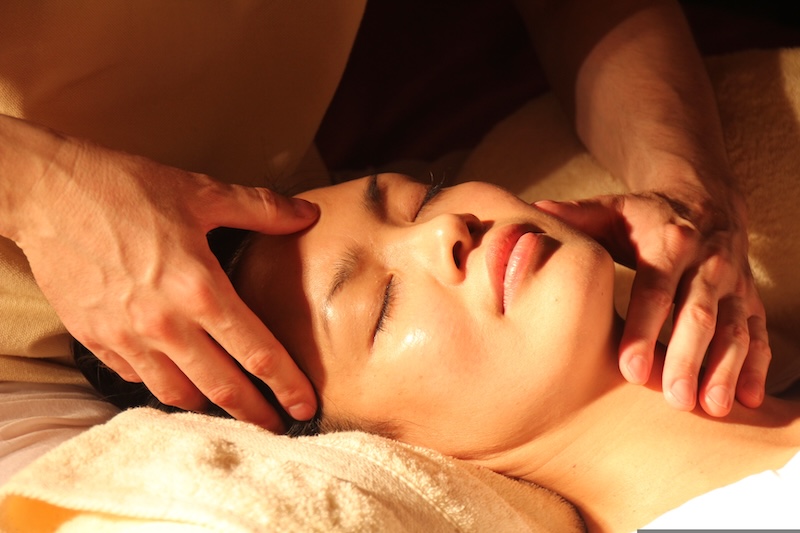

Massage in hotels is becoming part of the travel experience. From Thai massage to in-room pampering, discover a different side of your stay.
The massage you’ll remember more than the hotel breakfast
You wake up for work and, before you have even left the bed, you turn your head and hear that first crack. Your neck feels stiff, your lower back is heavy, your shoulders are tense and last night’s sleep did not leave you as rested as you had hoped. You get up, get ready and the day begins.
A few hours later, sitting in front of your computer, you feel the tension returning to your body. Your legs have gone numb and you realise you need to move.
On my travels, that need often had a very specific answer. After a full day walking through the streets, exploring and taking in a new city, I knew what my body needed. One hour of massage. To lie down, close my eyes and leave myself in the hands of a professional.
For me, massage gradually became part of travelling. And that made me wonder how much space massage really occupies in the hotel experience.
Away from the city map
A hotel can offer you a comfortable bed, a good breakfast, a gym, a swimming pool and even a full spa. Yet when a guest asks for a massage, an external therapist often has to be called in.
I have come across this many times. The therapist arrives at the hotel and carries out the session in the guest’s room or in a space temporarily arranged for the occasion.

From a traveller’s point of view, the request makes perfect sense. After a long flight, a demanding day of meetings or hours spent walking through a city, you may simply want to give your body some time. One hour of massage can be exactly what you need before continuing with the rest of the day.
What makes massage particularly interesting for hotels is that it does not necessarily require a full spa. With a qualified external therapist and the right setup, even a smaller property can offer an in-room massage experience.
Where massage is part of the culture
In an episode of Travelscope, Joseph Rosendo visits Bangkok and, as part of his exploration of the city, experiences Thai massage.
The experience continues at the traditional massage school of Wat Pho, where he learns some of the basic movements and gets a closer look at a practice deeply connected with Thai tradition.
Through this experience, massage becomes another way of discovering a destination and the different relationship it can have with the body and everyday life.

Anthony Bourdain also encountered Thai massage during one of his journeys through Thailand. In A Cook’s Tour, his time in Chiang Mai moves from food and the everyday life of a local family to Muay Thai and a traditional massage. Massage becomes another part of the journey, alongside flavours, people and the images of a place.
From the spices of India to the shores of Thailand
In India, Ayurveda opens another path. Traditional practices of body care are connected with an entire philosophy of life, and travellers can encounter techniques such as Abhyanga, using oils, or Indian head massage, with its focus on the head, neck and shoulders.
Then comes the relaxation, the sleep and the feeling that, after so much movement and stimulation, the body finally has time to slow down.

Today, massage comes in many different forms, each carrying something of the place and tradition from which it originates. Hot stones bring a lingering sense of warmth while the therapist’s movements follow the body. Shiatsu is based on firm pressure from the fingers and palms, while reflexology brings attention to the feet, following the traditional belief that specific points correspond to different areas of the body. Lymphatic massage uses slow and gentle movements, while bamboo massage incorporates specially designed bamboo sticks into the therapist’s movements, offering a more holistic approach to body care.
Five different ways to leave the tension of the day behind for a while and return to your travels feeling lighter.
The pampering that fits into your stay
Something similar is already happening in Athens. Sweet Home Hotel in Plaka offers in-room massage and has given its menu a distinctly Greek touch, with Cretan and Ancient Greek massage alongside more familiar options such as Swedish and sports massage.
There are also specialised professionals, who bring the necessary equipment to the hotel and carry out the session in the guest’s room. This means that even a smaller hotel can include massage in its stay without necessarily having a dedicated spa .
For hotels, this model offers an interesting possibility. A well-organised partnership can add a service that travellers are already looking for, making body care part of the overall stay.

Massage has already found its way into everyday hotel life. It can become a small element of a stay that remains in a traveller’s memory, alongside the experiences created by the destination.
Small rituals of travel
Over the years, we all develop our own small travel rituals. A particular breakfast table, a coffee in a square, a walk with no destination, a glass of wine before returning to the hotel.
For me, massage became one of them.
We travel, walk for hours, carry suitcases, sit on planes, stay up late and wake early to catch a market, a museum or a beach. From the first step at the airport to the final walk before leaving, the body follows the rhythm of the journey.

Why do travellers choose massage during a trip? After a long flight, hours of walking or a full day of exploring, it can be a simple way to slow down and give the body a moment of care.
That care deserves its place in the hotel experience. A massage can become part of a stay, a small moment of attention that a guest remembers and another reason to choose the same hotel again.
You close your eyes, let the rhythm of the city fade for a while and, when you get up, the journey continues.

