

Dodecanese islands with few residents reveal four secluded worlds of quiet coves, local flavours and unhurried summer days.
Far from the familiar harbours and crowded beaches, there are islands where the table easily grows larger and visitors soon feel among friends. Four small worlds in the Dodecanese, where Greek hospitality feels like being welcomed into a family home.
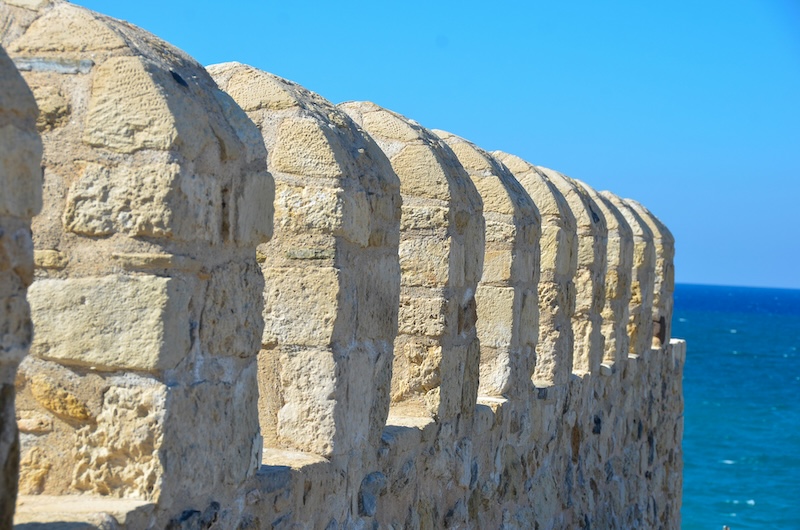
August in the Aegean has a light all its own. The sun falls fiercely over the dry-stone walls, the sea stretches towards the horizon in a shimmering expanse, and the summer meltemi cools the shores.
Among the better-known Dodecanese islands are places with only a handful of residents, small coves and an unhurried rhythm of life that feels made for summer.
These are islands you first discover from the sea, aboard a sailing boat or a small caique, then explore on foot along island paths, swimming in quiet coves and sharing a family table as the sun goes down.

The search for destinations like these is becoming increasingly appealing. Many travellers are drawn to places away from busy harbours and beaches in constant motion, looking for more time to rest, reconnect with nature and enjoy a sense of personal space. At a time when the mobile phone is rarely out of reach, there are still islands where hours can pass without looking for it, with the sea, the landscape and the people around you providing more than enough to fill the day.
Four Dodecanese islands keep that feeling alive. The only thing left is to discover them as they truly are, through their landscapes, their people and the small stories that belong to them.
Levitha: Where dry-stone walls meet the open sea

Levitha lies between Kinaros and Kalymnos, along a sea passage crossed for centuries by vessels travelling through the Aegean. Small natural coves shape its coastline, while inland, dry-stone walls, grazing land and bare slopes descend towards the sea.
The island has been closely associated for around two centuries with the Kambosou family, who came from Patmos and settled on Levitha. The family has long been involved in livestock farming and the land, while also running the island’s seasonal taverna, a much-loved stop for sailing boats anchoring in the sheltered cove.
The food here has all the simplicity of a home-cooked table. Fresh fish, goat and lamb, feta, kefalotyri, myzithra and tzatziki make their way to the table. Homemade sweets with fig and lemon follow, while travellers can also stock up on eggs and jams for their boat.
The waters around Levitha have yielded ancient shipwrecks, amphorae and an impressive granite anchor stock dating to the 6th century BC. The finds are a reminder that this quiet piece of land once occupied an important place along the ancient sea routes of the Aegean.
Marathi: A small shore in the blue of the Aegean

Marathi seems to have been shaped around a single cove. Its small beach is the natural meeting point of the island, with family-run tavernas looking out towards the water, while rocks, low vegetation and the open Aegean stretch around them.
Emilianos family arrived here in 1977. At the time, the island had neither electricity nor running water. Over the years, they established Pantelis taverna and the family accommodation, turning Marathi into a much-loved stop for those travelling through the Dodecanese by boat.
The sea sets the tone at the table in Marathi, too. Fresh fish, octopus, seafood, wild greens, homemade bread and local cheeses fill the air with the aromas of summer, while many of the ingredients arrive from neighbouring islands.
A small church dedicated to Agios Nikolaos, patron saint of sailors, stands close to the shore. Around it are a handful of houses, goats, seabirds and the cove, where boats come and go with the changing weather.
At night, the sea darkens and the sky fills with stars. A book, a chair by the water and a conversation that carries on late into the evening are enough to keep the night company.
Arki: The stone path towards the Aegean

Arki lies north of Lipsi and is the largest island in a small cluster of islets. The 2021 census records 38 permanent residents, while life on the island remains closely connected to fishing and livestock farming.
The best-known swimming spot is Tiganakia. Its waters are shallow and crystal clear, sheltered within a small cove that takes on vivid shades of blue beneath the summer sun. Boats arrive from Lipsi and the surrounding islands, bringing a little more movement to the shore for a few hours.
In the village, tavernas serve seafood and home-style dishes, with fishing and produce from the land remaining an important part of everyday life.
Around Arki stretches a small maritime world between Patmos and Lipsi. Fishing boats, sailing boats and small craft pass between the islets, creating a quiet rhythm across this corner of the Aegean.
A path above the settlement, the dry-stone walls and the views towards the surrounding islets reveal a different kind of summer landscape. Here, time is measured by the sun, the sea and the hours leading to the next swim.
In the afternoon, a final dip and a table beside the sea give way to the first breeze of the night.
Farmakonisi: Where the young Caesar was taken captive

At the eastern edge of the Dodecanese, Farmakonisi lies between the Aegean islands and the coast of Asia Minor. The 2021 census records 21 permanent residents.
The island’s ancient name was Pharmakousa, associated with the medicinal plants that grew in the area. It was also the setting for one of the best-known stories of antiquity.
The young Julius Caesar was travelling towards Asia Minor when he was captured by Cilician pirates. According to Plutarch, he was held at Pharmakousa for 38 days. When the pirates demanded a ransom, Caesar considered the amount too low and told them to ask for more. Once he had been released, he returned with ships to pursue his captors and exact his revenge.
The island is home to Agios Georgios, a church built in 1921, while the remains of an ancient Roman temple survive nearby. Its position so close to the coast of Asia Minor gives Farmakonisi a distinctive sense of a frontier and an open horizon.
The sea has the first word here. The waters stretch towards the coast of Asia Minor, the low vegetation carries the scent of summer, and the eye travels eastwards.
In the Dodecanese, where the Aegean hides its most secluded worlds
There are journeys that call for plans, reservations and a long list of things to see before the time runs out. Then there are those that allow the day to follow its own rhythm, with the sea deciding, where you go next.
In Levitha, a swim can lead to a long family lunch. In Marathi, the beach becomes the heart of an entire summer escape. In Arki, a stone path draws the eye towards the small islets of the Aegean. In Farmakonisi, the story of the young Caesar adds another layer to the landscape.
Perhaps this is the most beautiful thing about these places. A swim, a walk, a table beside the sea and a few hours away from the screen are enough to fill a summer day.
August suits them perfectly. The light lingers until late, the meltemi cools the shores, and the small islands of the Dodecanese continue at their own unhurried pace. At the edge of the map, all you need to do is surrender to the magic of the moment.
Our first international recognition
This summer brings a lovely reason to celebrate. Hospitality Ambassadeurs has been recognised by the LUX LIFE AWARDS 2026, based in London, as Best Hospitality & Gastronomy Experience Design Consultancy.
Reservations • Hospitality Content • Gastronomy Consulting
Have a hotel or restaurant and thinking about your next step? Let’s talk.

