
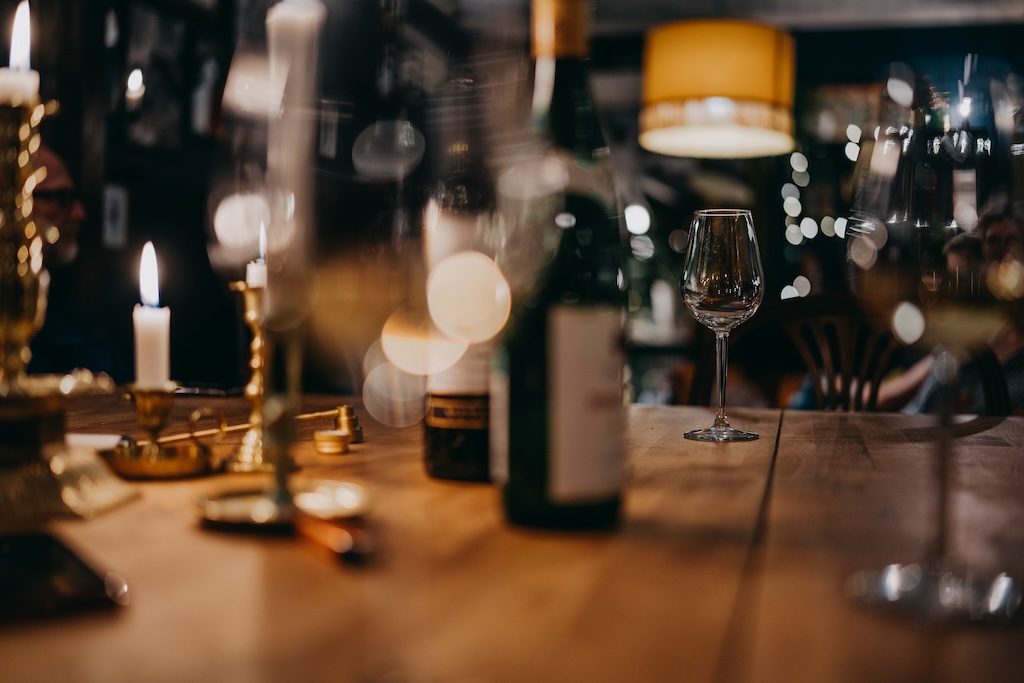

BYOB in Greece starts with a bottle worth sharing. Explore corkage, etiquette and the rules of bringing your own wine.
Long before I stepped into a professional kitchen, I was a wine lover. I was fascinated by the world of wine. I visited wine fairs, sought out new labels, explored different grape varieties and, for quite some time, collected wine accessories, from different styles of glassware and decanters to unusual corkscrews. Every new discovery held a place, a vintage, a producer, a story waiting to be told around a table.
At one point, I even started looking into buying a wine fridge for the house. I was comparing capacities, temperatures and, most importantly, where on earth I could put it. I loved the idea. Then I thought about the cleaning, pictured my wife’s reaction and reconsidered.

I’d be in the doghouse.
The wine fridge stayed on the wish list. My love of wine had already found its place.
For me, wine has always felt like the finishing touch to a great meal. Later, cooking gave that relationship a new dimension. Acidity, aromas, richness, textures, bold and subtle flavours began to interact with what was in the glass. Pairing became part of the creative process, opening another path for culinary expression.
Wine goes far beyond the role of an accompaniment. It speaks of place, culture and heritage. Greece is home to around 1,600 wineries, according to figures from Stochasis’ annual industry report. Behind their labels are vineyards, harvests, indigenous grape varieties, families, new generations of winemakers, contemporary techniques and traditions finding new life.
As a wine lover, I completely understand someone who has carefully stored a special bottle, waiting for the moment that feels right to open it and share it.
As a chef, I also know what happens on the other side of the table.
Can I bring my own wine to a restaurant?
This is where the real conversation about BYOB begins.
BYOB and the bottle you’ve been saving
BYOB stands for Bring Your Own Bottle and refers to the practice of bringing your own wine to a restaurant. Every establishment sets its own policy, so it is always worth asking in advance.
For someone, who cares deeply about wine, bringing a bottle from home often means something more.
It might be an older vintage that has been waiting patiently, a small-production wine discovered at a fair, a bottle brought back from a journey, or one first tasted alongside the person who made it. The search often leads to lesser-known grape varieties, distinctive winemaking styles and producers with a strong sense of identity.

What wine should you bring to a restaurant?
One that has a reason to be at that particular table. Its value lies in its story, the anticipation and the moment you chose to open it.
Who shapes the BYOB experience?
This, for me, is where the real challenge of BYOB lies.
The person bringing the wine already has a relationship with the bottle. They know the label, have stored it carefully and have imagined the moment it will finally be opened. At home, they have their glasses, their tools and the luxury of taking their time.
At a restaurant, they come for the chef’s cooking.
The kitchen has designed its dishes, flavours and the rhythm of the meal. The service team completes that journey, while the wine list has often been built around the restaurant’s culinary identity.
An older or more delicate bottle may need the right temperature, decanting, appropriate glassware and knowledgeable service. BYOB also exposes one of the realities of Greece’s restaurant and hospitality scene. Specialist wine knowledge cannot be taken for granted in every venue. According to the Institute for Tourism Research and Forecasts, ITEP, sommeliers were the hardest positions to fill in Greek hotels in 2024, with a shortage rate of 51%.

For someone arriving with a special bottle, that matters. Opening it correctly, choosing the right glass and serving it as intended all require knowledge.
BYOB can also add extra pressure on the service team. Someone bringing a distinctive bottle will often know their wine extremely well and arrive with specific expectations. Temperature, glassware, opening and decanting time suddenly carry greater weight. The team is asked to provide more personalised attention while maintaining the rhythm of a busy restaurant.
A conversation before the reservation gives everyone time to prepare properly.
BYOB in Greece and its unwritten rules
Can you bring your own wine to a restaurant in Greece?
Yes. In Athens, you will find different approaches. Some restaurants allow guests to bring wine and charge a corkage fee. Others ask for advance notice, while some may require that the bottle you bring does not already appear on their wine list. There are also places with no corkage charge.
BYOB already has a presence in the Greek dining scene. There is no single formula. Each restaurant sets its own framework.
What is proper BYOB etiquette?
BYOB etiquette starts way before the reservation. Ask whether the restaurant allows guests to bring their own wine, mention how many bottles you plan to bring and check its corkage policy. It is also worth telling the restaurant which wine you have in mind. This gives the team an opportunity to prepare the right glassware and service and helps you avoid arriving with a bottle already featured on the wine list.
What does a restaurant gain from BYOB?
A relationship of trust with a guest who appreciates wine and returns for the cooking. That kind of value does not always appear on the bill at the end of the evening.
When a Chef cooks around your wine
I have experienced BYOB from the chef’s side of the table.
At the rooftop restaurant of Hotel London in Glyfada, which comes to life in summer, I have welcomed a group of friends with their own wine, even during a particularly busy period. You step onto the rooftop, the sea comes into view and the mood shifts almost instantly. Athens in summer has a way of doing that.
That particular dinner had begun taking shape well in advance.
We had spoken beforehand about the wines one of our friends had chosen for the evening. I built the menu around them, and we even decided who would handle the service so that every bottle received the attention it deserved.
Can a bottle of wine inspire a menu?
Absolutely. For me, this is one of the most rewarding expressions of BYOB.
If there is a chef you know, or whose cooking you particularly admire, contact the restaurant in advance. Tell them about the wines you would like to open and ask whether BYOB can be arranged. Time gives the kitchen room to think about flavours, allows the service team to prepare and gives everyone at the table something to look forward to.
Some bottles wait years for the right moment.
Corkage fee and the actual cost of bringing your own wine
Does BYOB always mean a corkage fee?
No. BYOB works differently from country to country and from one restaurant to another. Many establishments charge by the bottle, while others offer free corkage. In some markets, the ability to bring your own wine is also linked to the restaurant’s licensing arrangements.
Where it applies, a corkage fee accounts for the service surrounding the bottle, including glassware, opening, pouring and handling. There is another element in the equation too. A bottle brought from home replaces a potential sale from the restaurant’s wine list.

Imagine walking into a bar carrying your own gin or whisky and asking for a glass and some ice.
That image tells you almost everything you need to know.
Drinks are an important part of a restaurant’s revenue. Staff, rent, energy, equipment and storage all carry real costs. A corkage fee therefore has a place in the conversation, provided that the charge reflects the service being offered.
How much is a corkage fee?
There is no universal rate. Each restaurant sets its own policy, and some BYOB restaurants charge nothing at all. Asking before making your reservation establishes the ground rules and leaves you free to enjoy the occasion.
Restaurant wine prices and what you’re really paying for
Anyone, who knows their way around a wine list will recognise the moment. You open it, spot a label you have bought several times before and see its restaurant price.
The calculation is almost automatic.
Regular visits to wine shops, fairs and wineries give you a sense of producers, vintages and what those bottles actually cost.
Stefanos Kogias, someone from the wine world whom I have known for years, has expressed a fairly pointed view on the subject. He regards excessive mark-ups as a serious issue and raises an important question.

What are you paying for with that bottle?
Proper storage, the right serving temperature, suitable glassware and knowledgeable service all have genuine value. A high price can discourage a guest from ordering a second bottle or even another glass. At some point, the price itself begins to limit the pleasure of choosing.
The restaurant has its own economics to consider. Wine represents an important part of restaurant revenue and helps cover operating costs that remain invisible to the guest. A bottle brought from home means one less bottle ordered from the list. In a smaller restaurant, the practice may be easier to weave into the dining experience. In a venue that has invested heavily in a cellar, wine list, sommelier and degustation menu, the equation becomes more complex.
As a wine lover, I understand the conversation surrounding restaurant wine prices.
As a chef, I know the costs that remain unseen from the table. Staff, energy, rent, equipment, storage, glassware, capital tied up in the cellar and an entire team all sit behind what eventually reaches the table.
When does the price become excessive?
When the guest can no longer recognise the value of what is being offered.
BYOB in Greece and a table worth planning
For anyone with a bottle they have been saving, BYOB can become the starting point for a memorable meal. That long-awaited wine finally finds the right table, the right people and the food you want beside it.
Talking to the restaurant beforehand makes all the difference. The chef knows which wines are coming and can think about the menu around them. The service team can prepare, while everyone at the table gets to enjoy the occasion as they had imagined it.
What stays with you afterwards?
The flavours, the people around the table and the memory of a meal built around a wine you truly wanted to open.
For me, that is the essence of BYOB. A bottle you’ve been waiting to open, food made for the occasion and a moment you’ll want to remember.

