
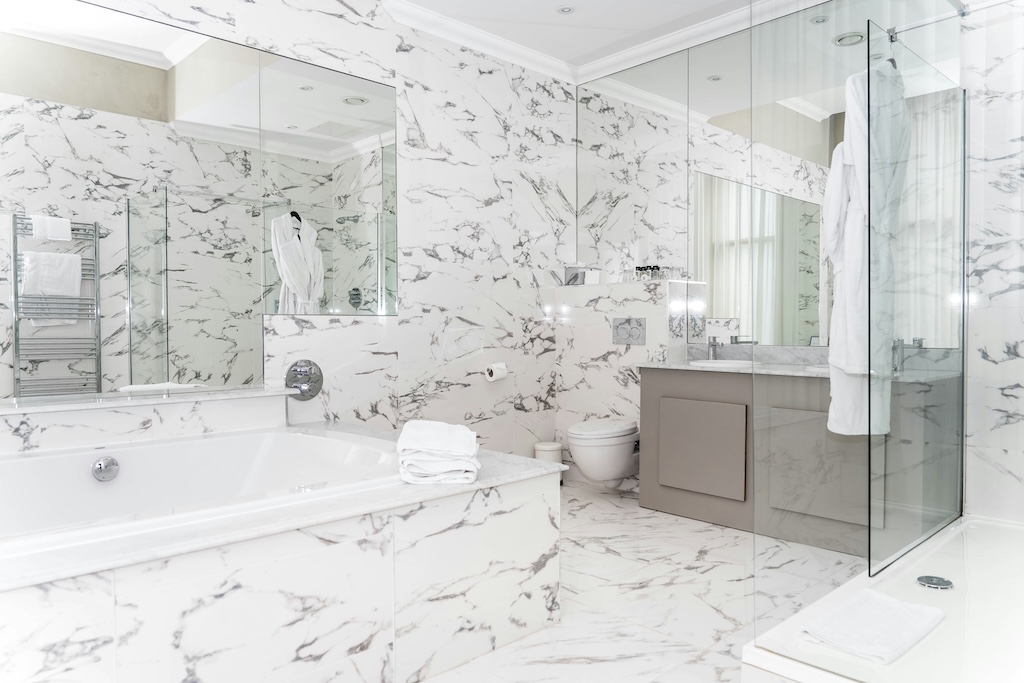

Hotel bathroom insights reveal the dirtiest spots, common traveler mistakes, and the latest design trends that shape your stay experience.
The Hotel Bathroom and the importance of first impressions
A hotel bathroom is perhaps the most defining space in a traveler’s experience. It’s no coincidence that most guests check it immediately upon entering the room, as cleanliness is a key deciding factor. Research in the hospitality industry, along with data from major platforms like Booking and Expedia, shows that a very high percentage of travelers directly associate the cleanliness of the bathroom with the hotel’s overall image—often influencing the final rating. At the same time, hygiene organizations and scientific studies confirm that bathrooms are among the most “sensitive” areas in terms of microorganism concentration, mainly due to humidity and frequent use.

Why hotel bathrooms are small
One of the most common questions travelers ask concerns the size of hotel bathrooms. The answer lies primarily in the way modern hotels are designed. Limited space, especially in urban environments, leads architects to prioritize functionality and maximize room space. As a result, bathrooms become more compact, but also more intelligently designed. This trend is no coincidence, as modern hospitality design emphasizes space efficiency, smooth movement flow, and creating an experience that balances comfort with practicality.
The dirtiest spots in a hotel bathroom
Although hotels follow strict cleaning protocols, certain areas tend to accumulate more microbial activity. The toilet bowl remains one of the most sensitive spots not only because of its use, but also due to the dispersion of micro-droplets when flushing. Similarly, faucets, handles, and switches are high-touch surfaces used constantly by different guests. The sink and surrounding areas retain moisture and soap residue, creating conditions where microorganisms can survive more easily. Finally, the shower is one of the most “deceptive” areas, as humidity and heat create an environment that encourages the growth of microbes and residue, especially in grout lines and less frequently cleaned spots.

Never step into the shower without checking first
Before using a hotel shower, it’s wise to do a quick check of the space. There’s no need to be excessive, but a few seconds of observation can make a difference. Many travelers let the water run briefly before stepping in, helping to flush out any residue from the pipes. Others prefer to use personal items such as flip-flops, especially in high-humidity environments. This behavior is not excessive—it has become part of a more conscious travel mindset, as people place greater importance on personal hygiene and safety.
The “hidden” details that shape the experience
Beyond cleanliness, other factors also influence the bathroom experience. Material choices, the overall sense of cleanliness, and maintenance play a crucial role. One of the most debated features is the use of glass bathrooms or partitions within the room—a trend mainly seen in modern and luxury hotels. Although designed to create a sense of openness and contemporary aesthetics, many guests find them less practical due to the lack of privacy. This highlights how design, no matter how impressive, must always be balanced with user comfort.

Modern trends in hotel bathrooms
Modern hotels are investing more and more in bathroom design, as it is a key part of the overall guest experience. Trends are moving toward minimal lines, natural materials, and a “spa-like” atmosphere, with spaces that feel more like private retreats than purely functional bathrooms. Walk-in showers without enclosures, large tiles, and clean surfaces are now particularly popular, as they create a sense of openness and cleanliness.
At the same time, technology is making a strong impact, with features such as touchless sensors, smart mirrors, and lighting systems that adapt to user needs. Sustainability is also a major trend, with a focus on reducing water consumption and using environmentally friendly materials. Finally, accessibility has become central to design, with bathrooms that accommodate different needs, offering greater comfort and safety.

When the bathroom becomes… a puzzle
One of the most modern complaints from travelers is not about cleanliness, but about how to actually use the bathroom. In recent years, hotels have invested in more “intelligent” and minimalist systems but this trend often creates an unexpected problem: guests don’t know how to use them.
From showers with multiple controls and unfamiliar settings to digital panels without clear instructions, the bathroom can quickly turn into a trial-and-error experience. Hospitality research shows that many guests struggle with modern systems, while more than half of providers acknowledge that customers often need guidance to understand basic functions.
This situation is not accidental. Designers aim to create minimalist and visually striking spaces, but this often comes at the expense of simplicity and practicality. The result is a bathroom that looks impressive, but in reality requires… a user manual.

For the traveler, this translates into a small but real frustration especially after a long journey, when all they want is a simple, straightforward shower without complicated controls.
A hotel bathroom is much more than a simple functional space. It is a place where cleanliness, design, technology, and the traveler’s experience come together. Details matter, and they influence not only comfort but also the perception one forms of the hotel as a whole. In a world where travelers are more informed and demanding than ever, quality and attention to these “small” details can make the difference between an ordinary stay and a truly memorable experience.

